Why do some cities begin to speak when daylight is almost gone?
Blue hour is not night. It is a pause in which familiar streets lose their daytime certainty and reveal a second character.
01
Light without shadow
The final daylight does not disappear at once. It thins across roofs, stone and water until edges remain visible but shadows stop insisting on their depth. A city briefly feels less solid and more open to interpretation.
This interval rewards patience. Details that competed throughout the day begin to belong to one register: slate sky, pale facades, river reflections and the first warm windows. Nothing needs to move for the scene to change.
02
Three cities, one register
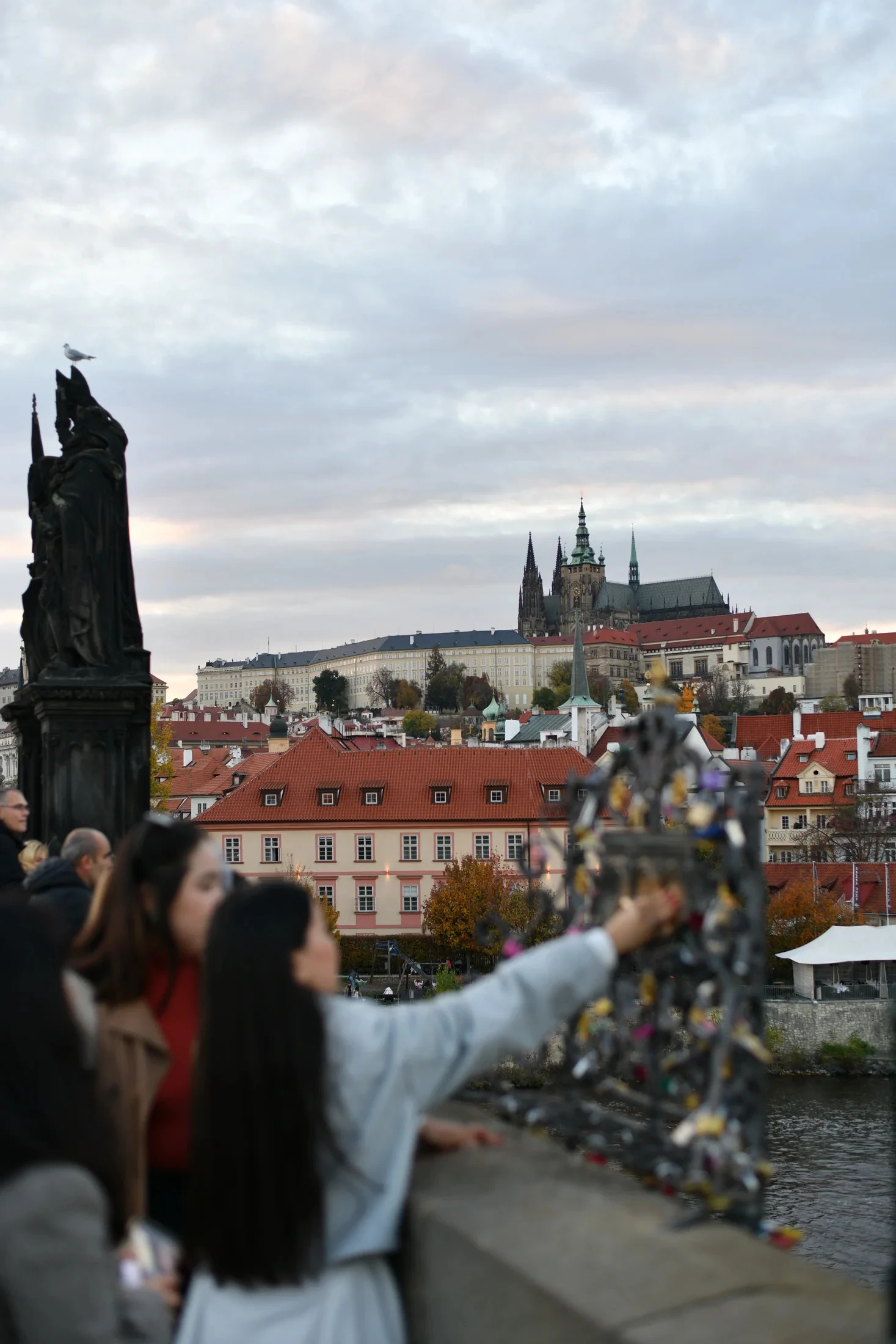
Prague gathers blue light around towers and the Vltava. Venice disperses it across water until architecture appears almost weightless. Budapest stretches it along the Danube, where bridges turn the transition into a broad urban horizon.
These cities are not joined by proximity or popularity. They belong together because evening light changes how their architecture is read. The same hour reveals different relationships between stone, water and distance.
03
The memory of an hour
A photograph can preserve the colour of this interval, but its deeper value is temporal. It reminds us that seeing a place depends on when we choose to stop. Blue hour cannot be collected efficiently; it has to be waited for.
Perhaps that is why these images remain vivid. They do not describe a whole city. They hold one short condition in which the city seemed to speak more softly, and therefore more clearly.
A deeper reading
Three ways to remain with the idea
Reflection
Which familiar place becomes more legible to you when daylight begins to withdraw?
Hold the question without answering quickly. The value of blue hour is often the attention it makes possible.
Photography note
- Observation
- The remaining sky was reflected most clearly in the river, while the stone retained only a restrained blue cast.
- Moment
- The frame was made after the brighter colour had passed, when warm windows began to separate from the cool city.
- Why this frame
- This photograph was chosen because it records transition rather than spectacle: architecture, water and distance briefly share one quiet register.
Journey meaning
Along the Danube
The route gives the idea a physical rhythm by following water, bridges and evening horizons, allowing changing light to be experienced across several urban distances rather than at one fixed viewpoint.
Experience the idea through this route →Editorial path · 1 of 2
Weather, light and the altered city
Why the reading continues
Blue hour changes a city through diminishing light; the next essay continues the observation through weather, reflection and the temporary second surface of streets.
Read the city through another passing condition
The movement from evening light to recent rain reveals how atmosphere can alter attention without changing the underlying architecture or turning the city into spectacle.
Continue with Europe After Rain →