Austria · 48.2082° N · 16.3738° E
Vienna
Discover Vienna through original photographs of its palaces, churches, streets and gardens, from the Hofburg and Belvedere to Setagayapark and the contemporary architecture beside Hauptbahnhof.City chapter · 01
48.2082° N · 16.3738° E
Vienna, seen through the lens
Discover Vienna through original photographs of its palaces, churches, streets and gardens, from the Hofburg and Belvedere to Setagayapark and the contemporary architecture beside Hauptbahnhof.
Vienna unfolds at different scales: a palace across a formal garden, a church tower between street façades, a horse at a stable door or moving water beneath a small bridge. This collection follows those changes of scale through original photographs, with a place guide beside each architectural or garden subject.
Start with the landmarks, browse the photographic collection or choose a place on the map. Each photograph has its own story and viewing page, with routes back to its place and the city. The collection includes the historic centre, the Ringstrasse, Schönbrunn, Döbling and the Hauptbahnhof district; use the map to understand their separate locations before planning your visit.
Vienna · places and perspectives
Vienna on the map
Explore Vienna’s photographed places, from the historic centre and Schönbrunn to Setagayapark and Hauptbahnhof. Choose a place, then select one of its photographs or open the landmark guide. Markers identify places; an approximate location is labelled explicitly.

Drag with a mouse, use two fingers on a phone, or use the controls. With the map focused, use arrow keys, + / − and Home. Scrolling the page does not zoom the map.
Palace and gardens
Schönbrunn Palace
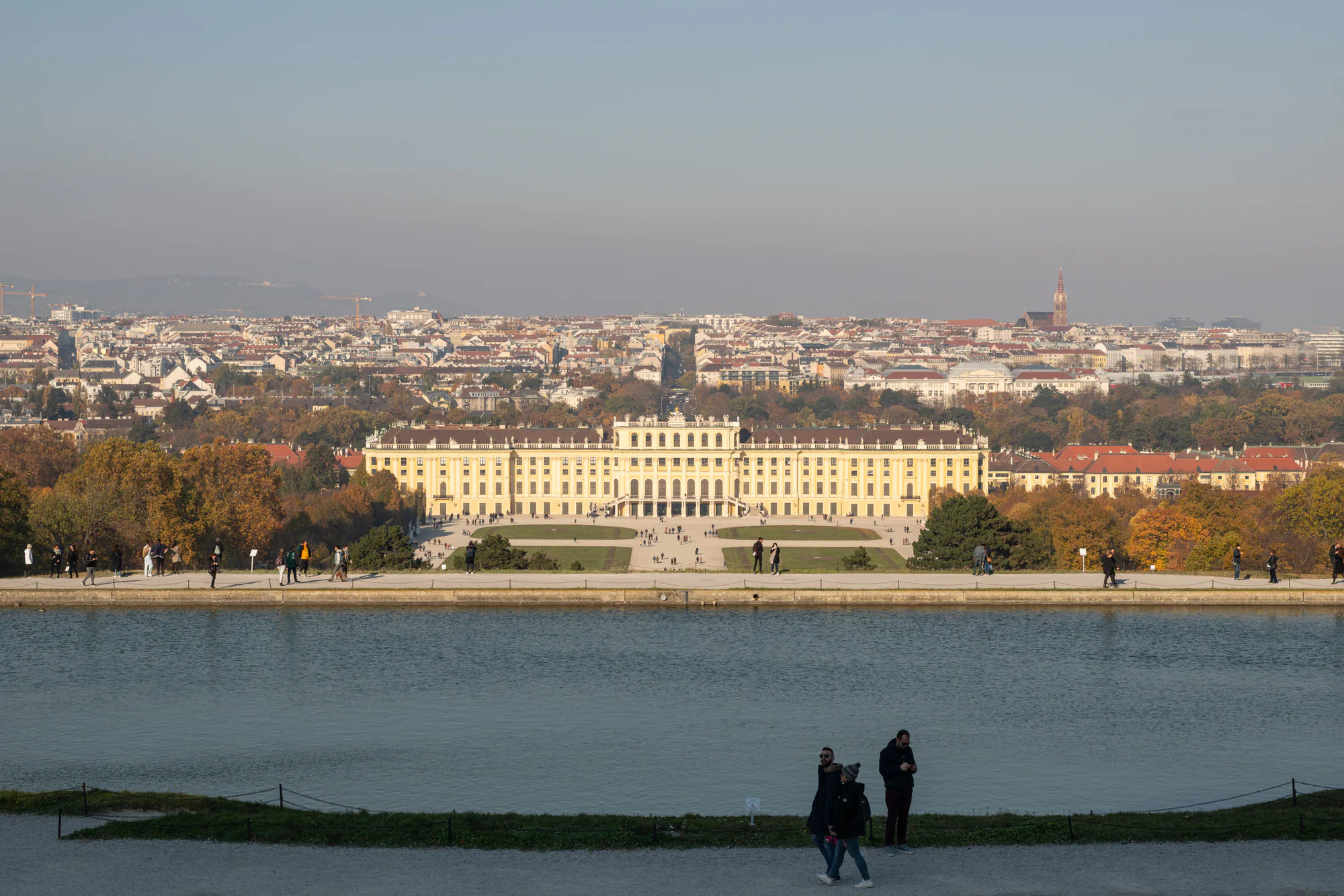
The palace and formal gardens below the Gloriette, seen in the featured photograph.
- St Stephen’s Cathedral Through Vienna’s Streets ↗
- St Stephen’s Cathedral Roof and Stone Tracery ↗
- St Stephen’s Cathedral Stonework from Below ↗
- St Stephen’s Spire above the Street ↗
- Schönbrunn Palace from the Gloriette ↗
- Schönbrunn Palace across the Forecourt ↗
- Schönbrunn Palace and Vienna from the Hill ↗
- Schönbrunn through the Neptune Fountain ↗
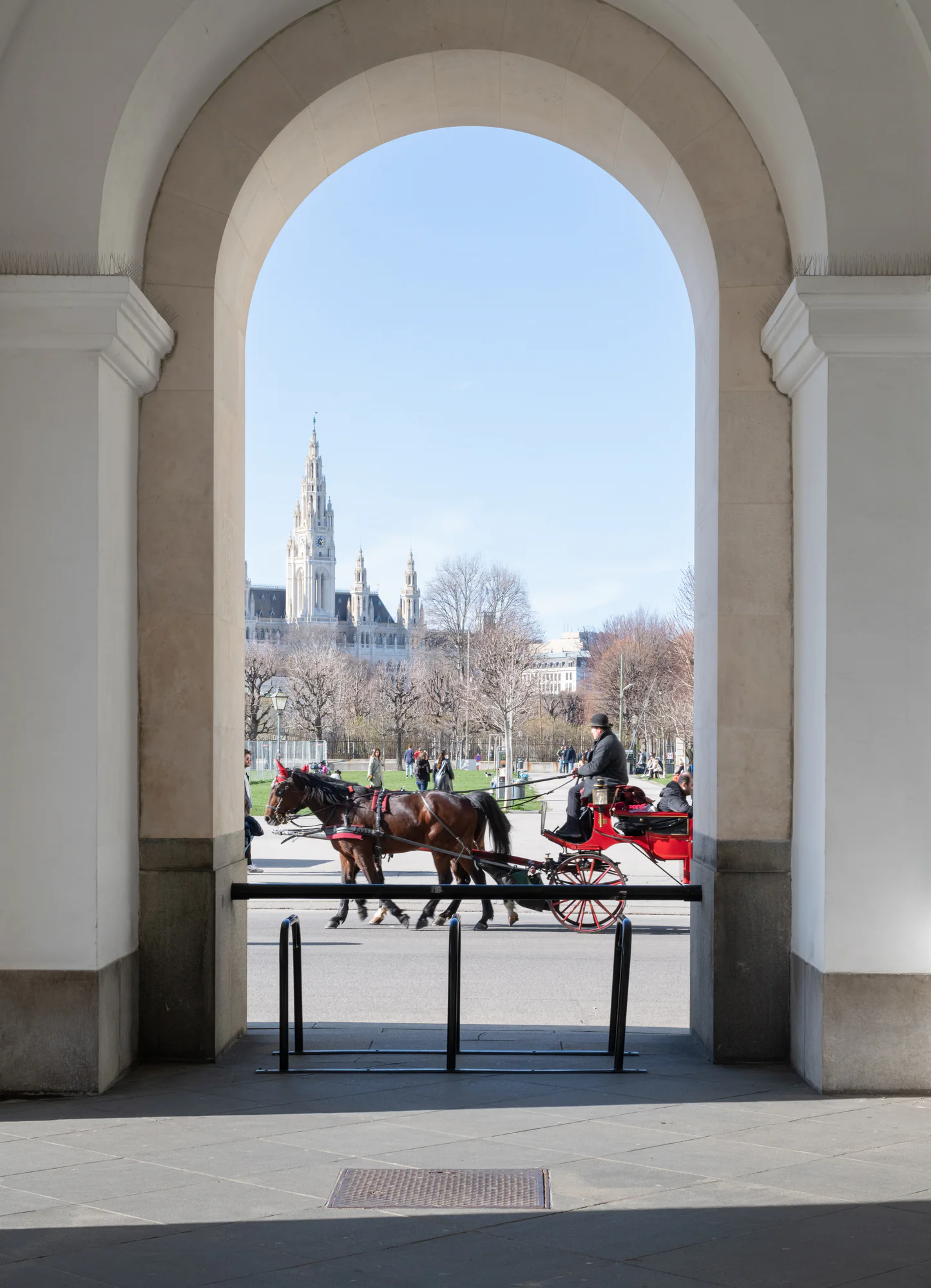
- A Horse-Drawn Carriage in Schönbrunn Courtyard ↗
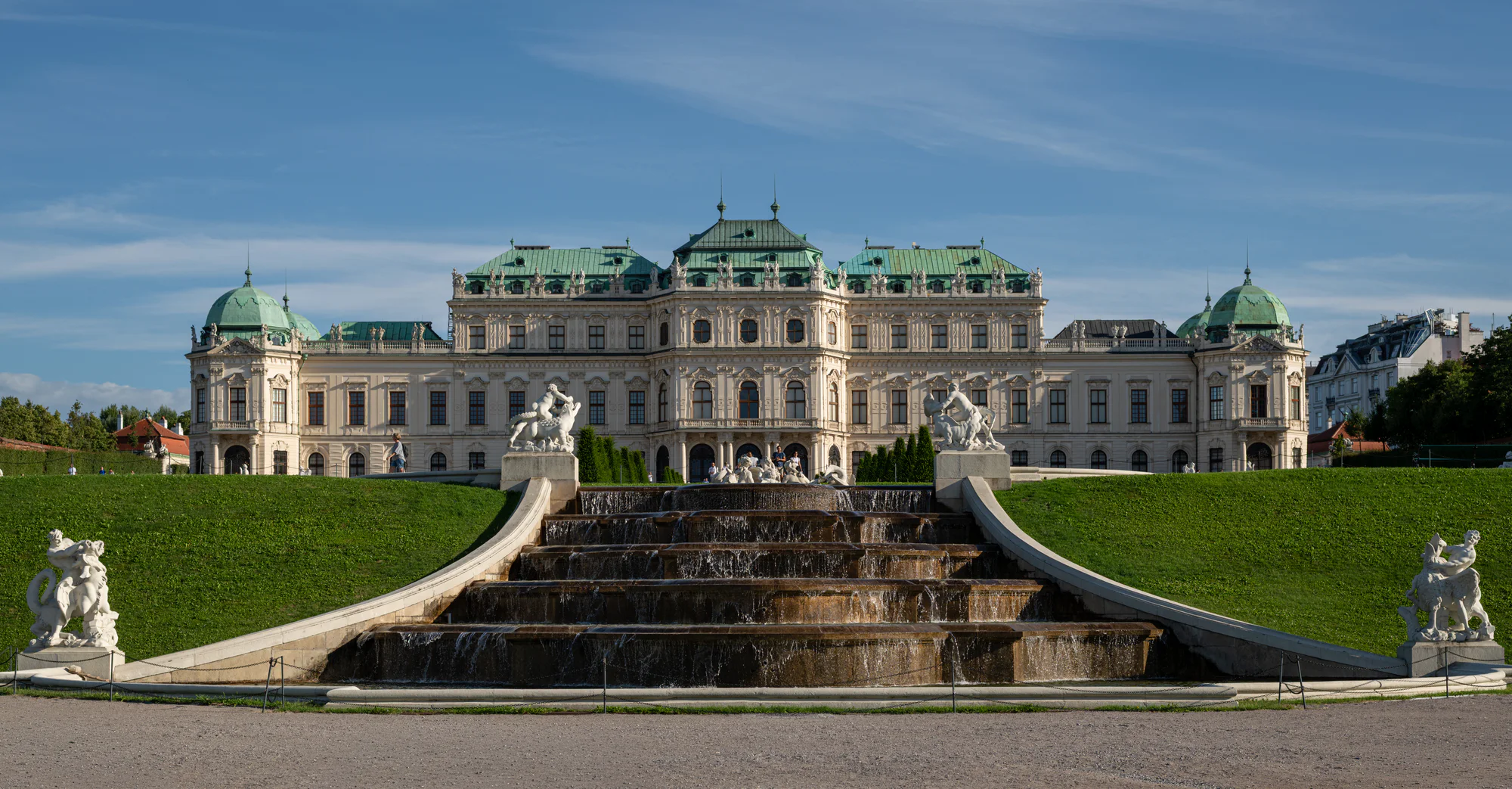
- Upper Belvedere and the Garden Cascade ↗
- Upper Belvedere beyond the Formal Garden ↗
- Upper Belvedere beside the Reflecting Pool ↗
- A Belvedere Sphinx beneath a Green Dome ↗
- A Belvedere Sphinx against the Palace Façade ↗
- Sphinxes along the Belvedere Terrace ↗
- A Belvedere Fountain Looking towards the City ↗
- Setagayapark Bridge beside the Waterfall ↗
- A Shaded Path through Setagayapark ↗
- Water and Flowers in Setagayapark ↗
Architecture
Architecture and gardens
St Stephen’s Cathedral
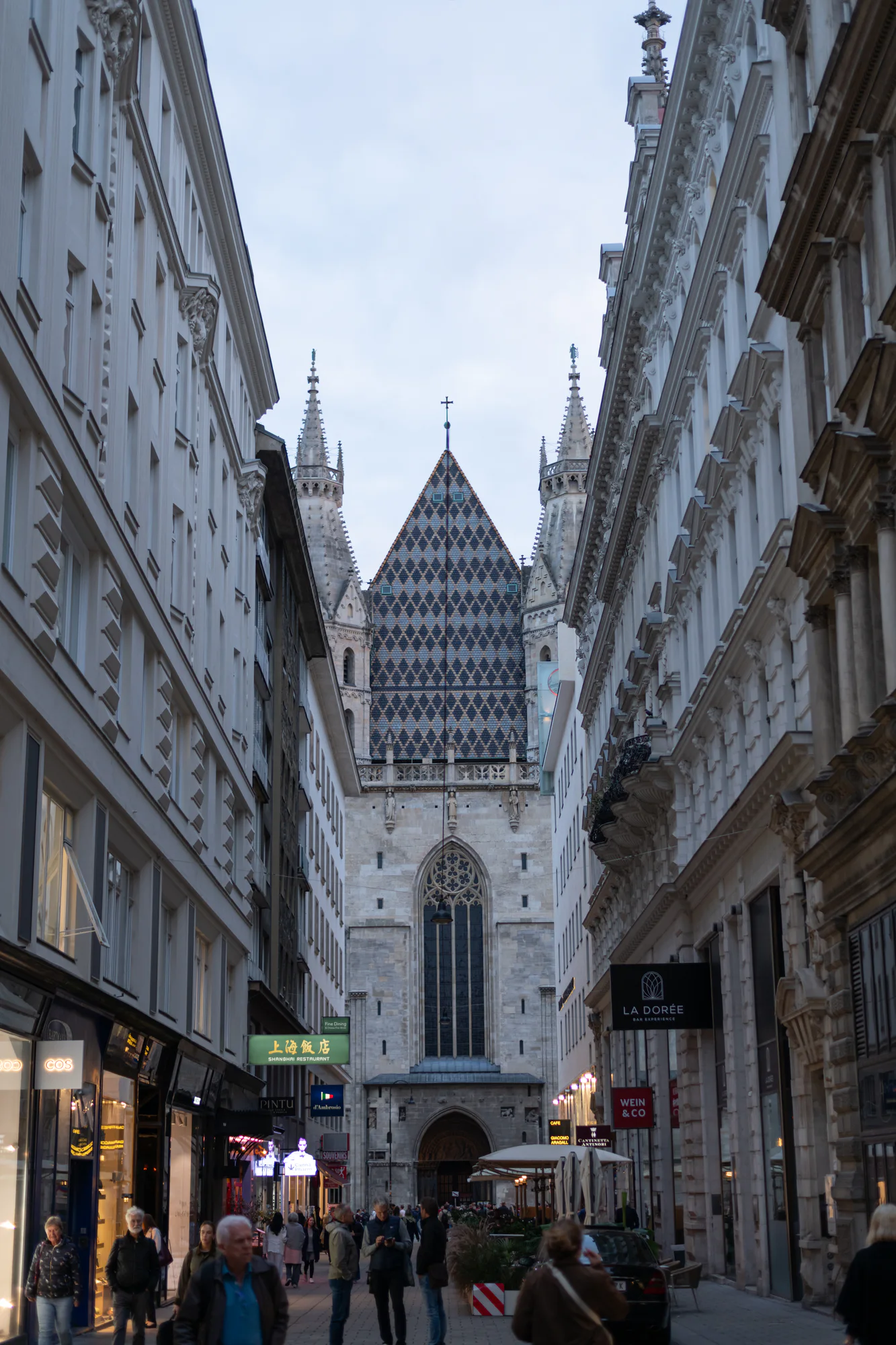
St Stephen’s Cathedral rises above Stephansplatz at the heart of Vienna. Its patterned roof, Gothic stonework and surviving Romanesque entrance reward a closer look. Explore the building’s layers of history, the streets around it and the practical details to check before a visit.
Belvedere Palace
Upper Belvedere forms part of the palace and garden complex commissioned by Prince Eugene of Savoy and designed by Johann Lukas von Hildebrandt.
Schönbrunn Palace
Schönbrunn Palace and its gardens form one of Vienna's defining historic ensembles.
Begin with the palace and cathedral landmarks below, then explore the wider collection of churches, museums, gardens and contemporary architecture. Each guide brings together the place, its photographs and official visitor information.
Palaces and court life
Hofburg
The Hofburg is best approached as a sequence of connected buildings and spaces. Courtyards, gates, domes and long façades reveal a palace complex that grew over centuries, rather than a monument designed to be understood from one viewpoint.
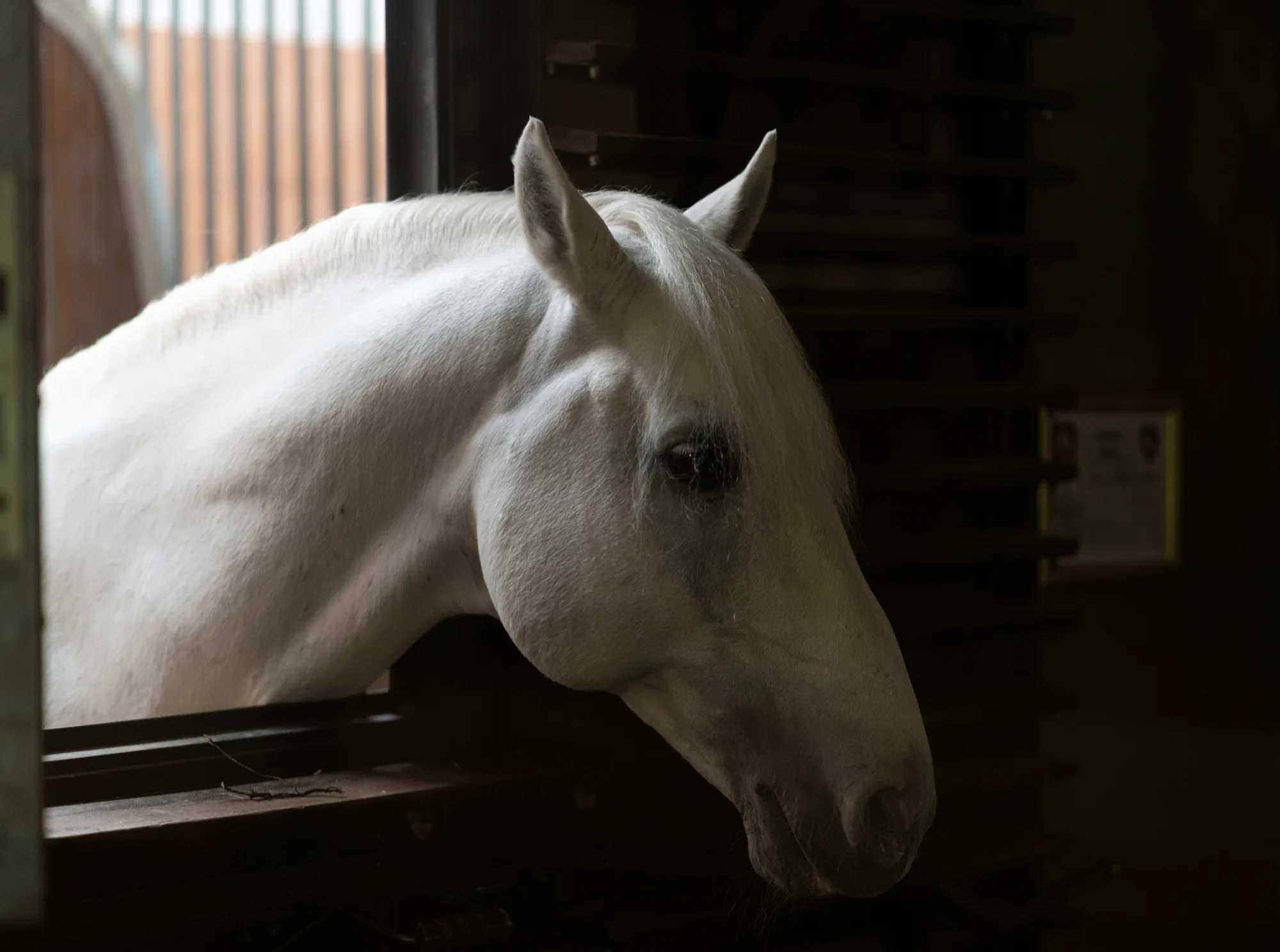
Stallburg and the Imperial Stables
The Stallburg adds the working world of horses and stables to the Hofburg story. Its Renaissance architecture and close relationship with the Spanish Riding School belong to a different scale of palace life from the ceremonial façades and open squares nearby.
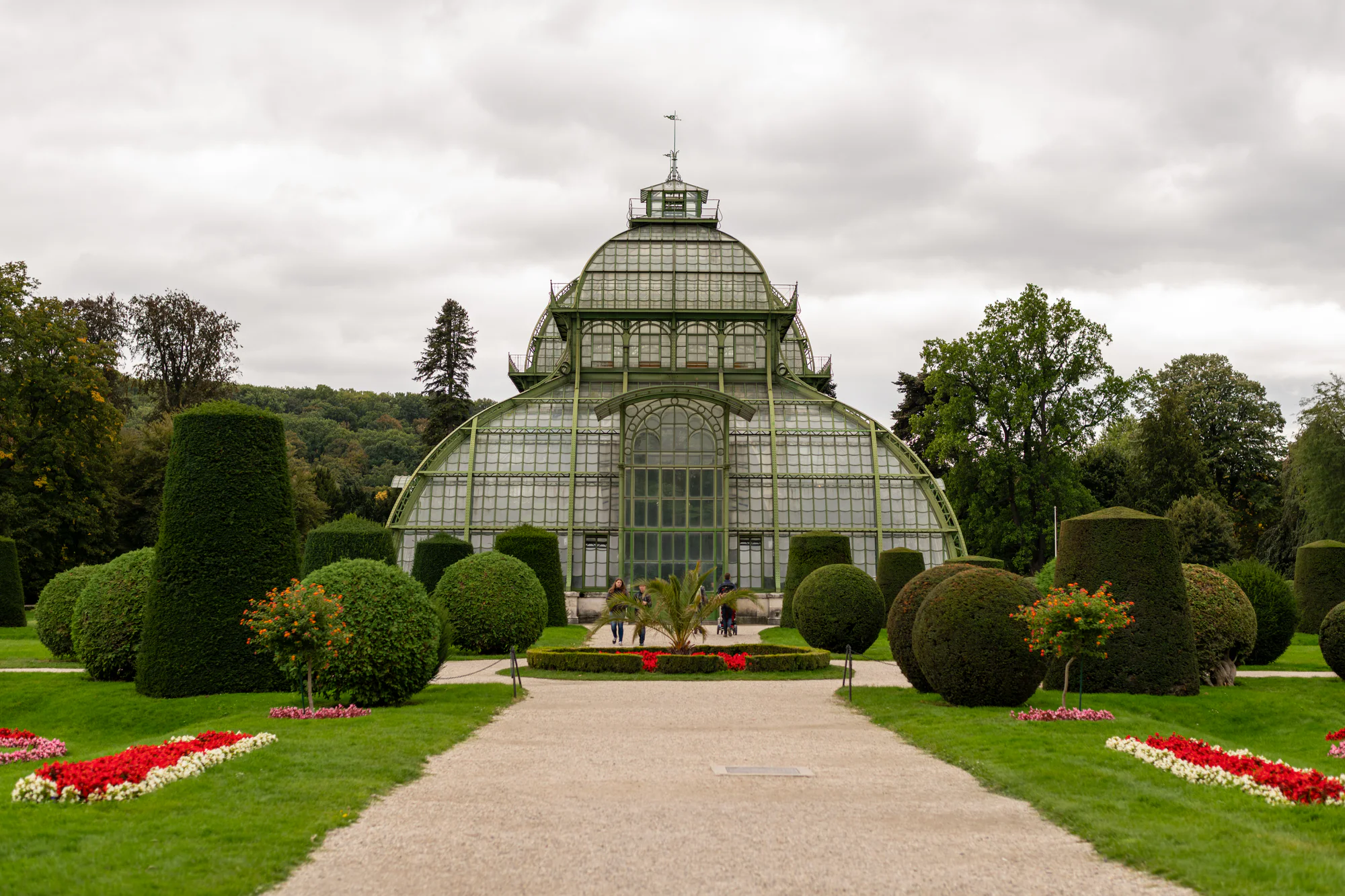
Schönbrunn Palm House
The Palm House brings a different kind of architecture to Schönbrunn: a long sequence of curved iron ribs and glass, made for plants rather than court ceremony. Its slender framework offers a useful counterpoint to the palace façades and the park’s formal avenues.
Art and music
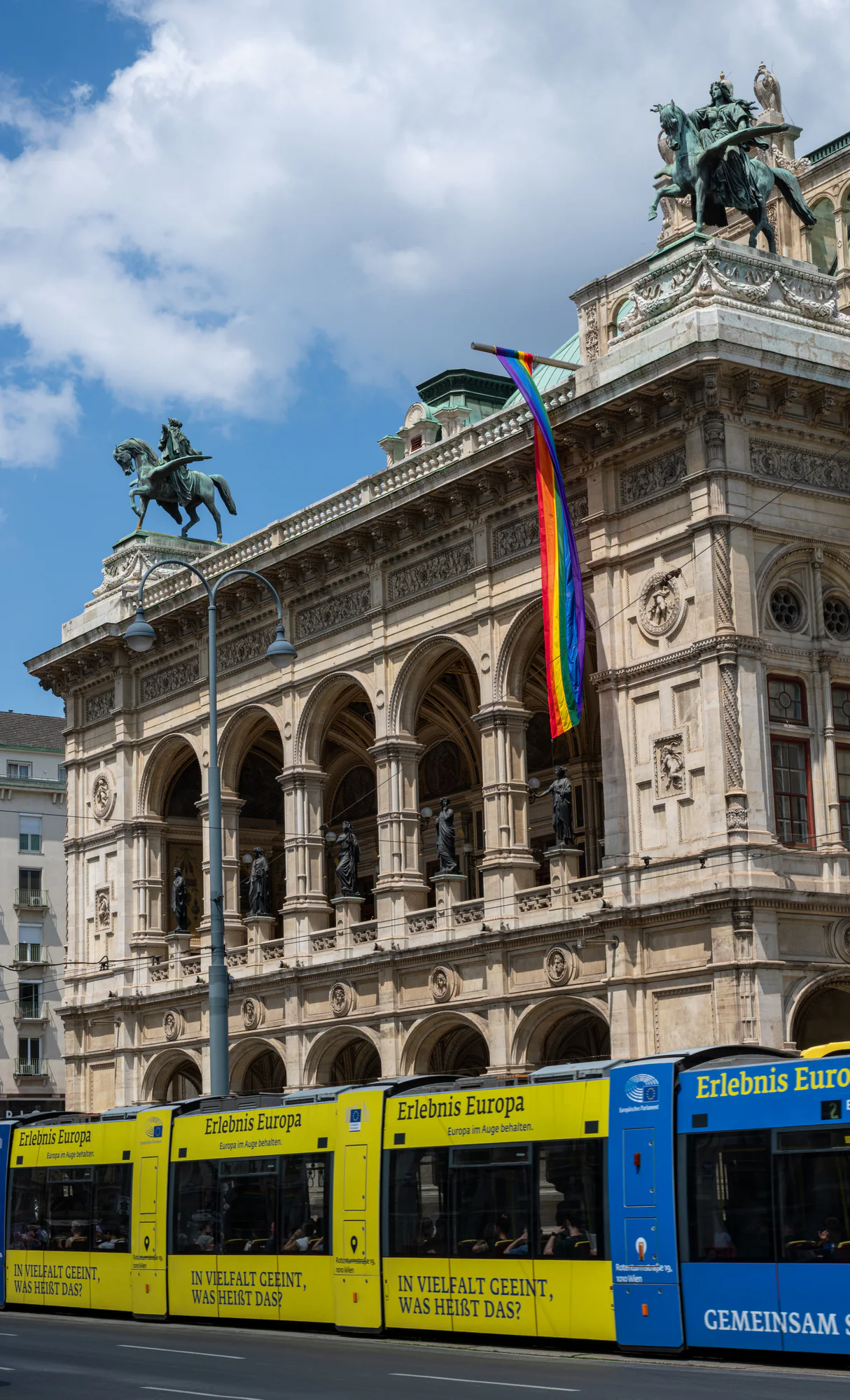
Vienna State Opera
The Vienna State Opera occupies a hinge between the Ringstrasse and the older city. Its arcades, roofline and broad street setting make it an architectural subject as well as a performance venue, with the Albertina and the Hofburg providing nearby chapters in the same urban story.
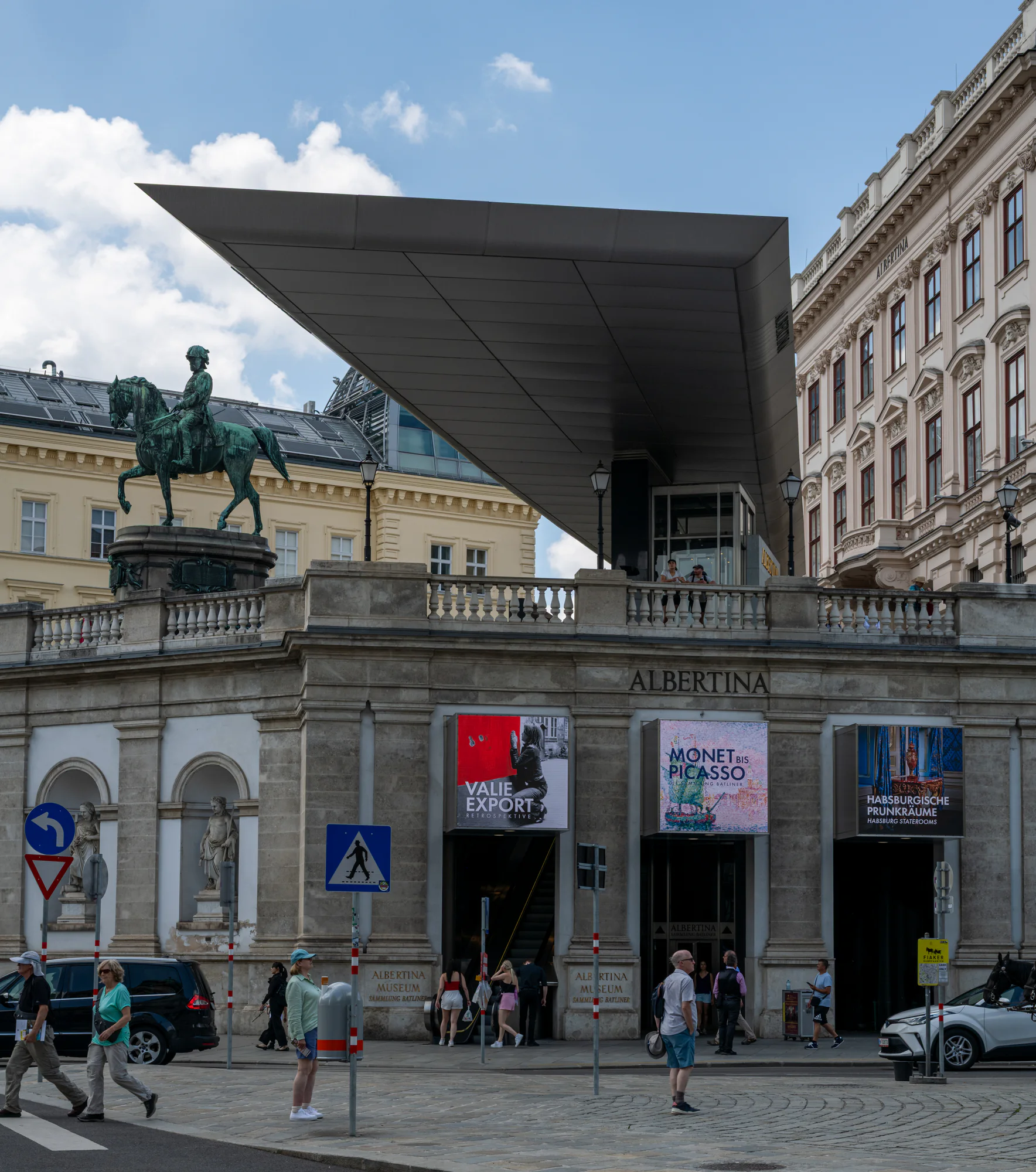
Albertina
The Albertina combines a major art museum with the fabric of a former Habsburg residence. Its position above the surrounding streets makes the approach part of the experience: changing levels, palace architecture and the neighbouring opera district meet in a compact section of central Vienna.
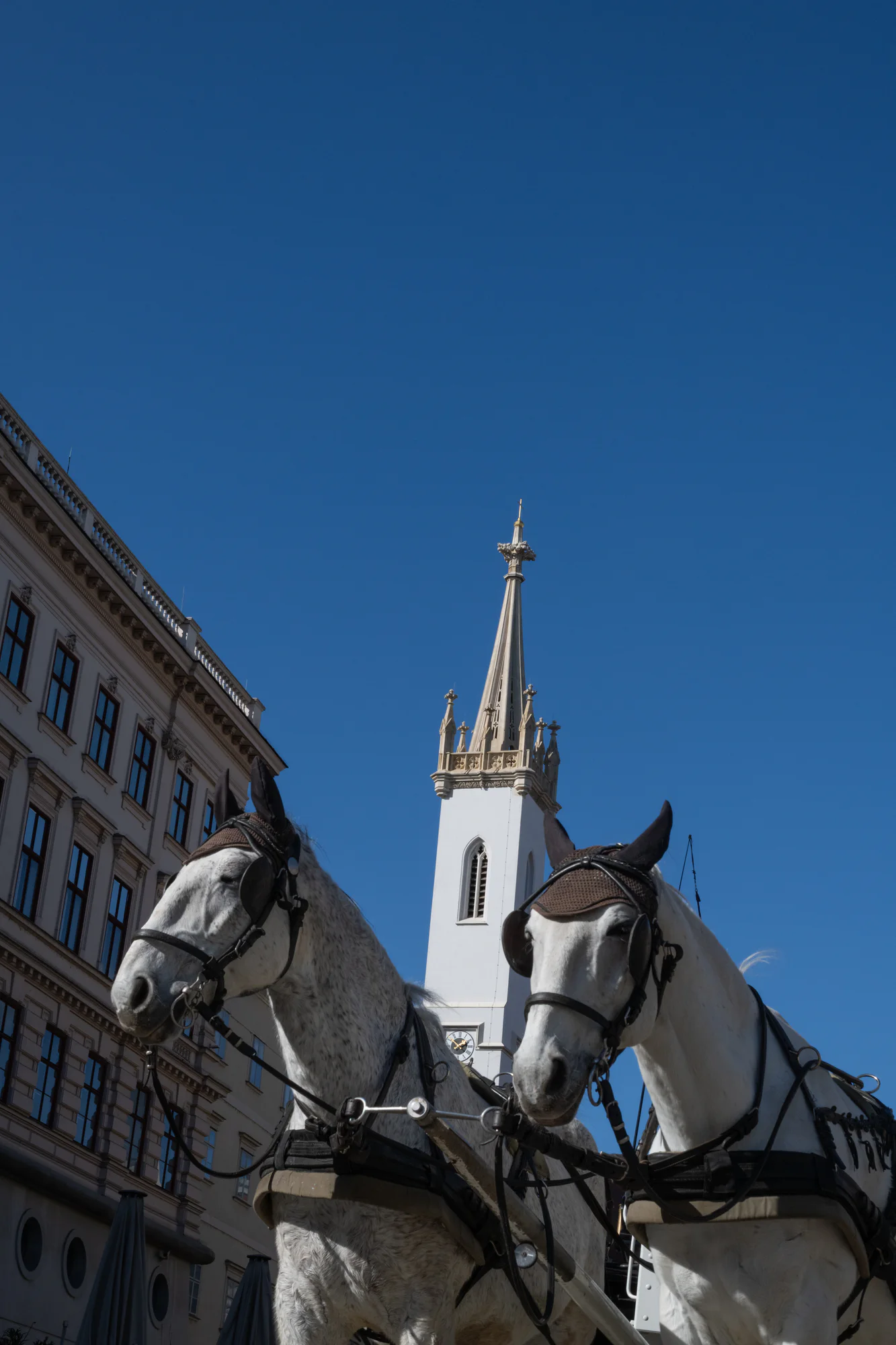
Augustinerkirche
Near the Albertina, the Augustinerkirche reveals a church woven into the Hofburg rather than standing apart on an open square. Its tower can appear above surrounding façades before the visitor recognises the building’s larger place within the palace complex.
Ringstrasse and museums
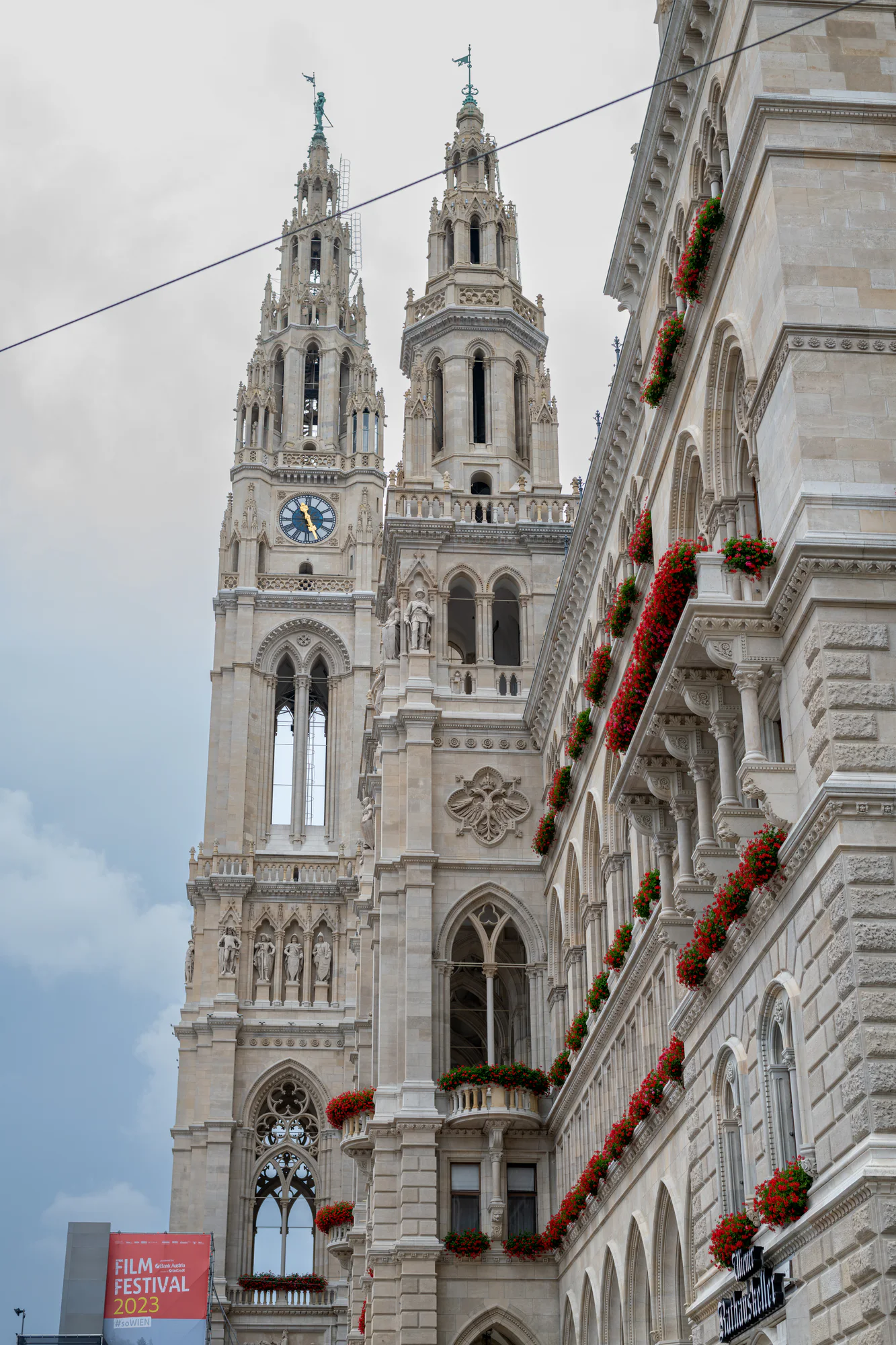
Vienna City Hall
Vienna City Hall brings a civic form of monumentality to the Ringstrasse. Its tall central tower and elaborate Neo-Gothic façade can resemble a cathedral at first glance, but this is a building of municipal government, set beside a park and a square used for public life.
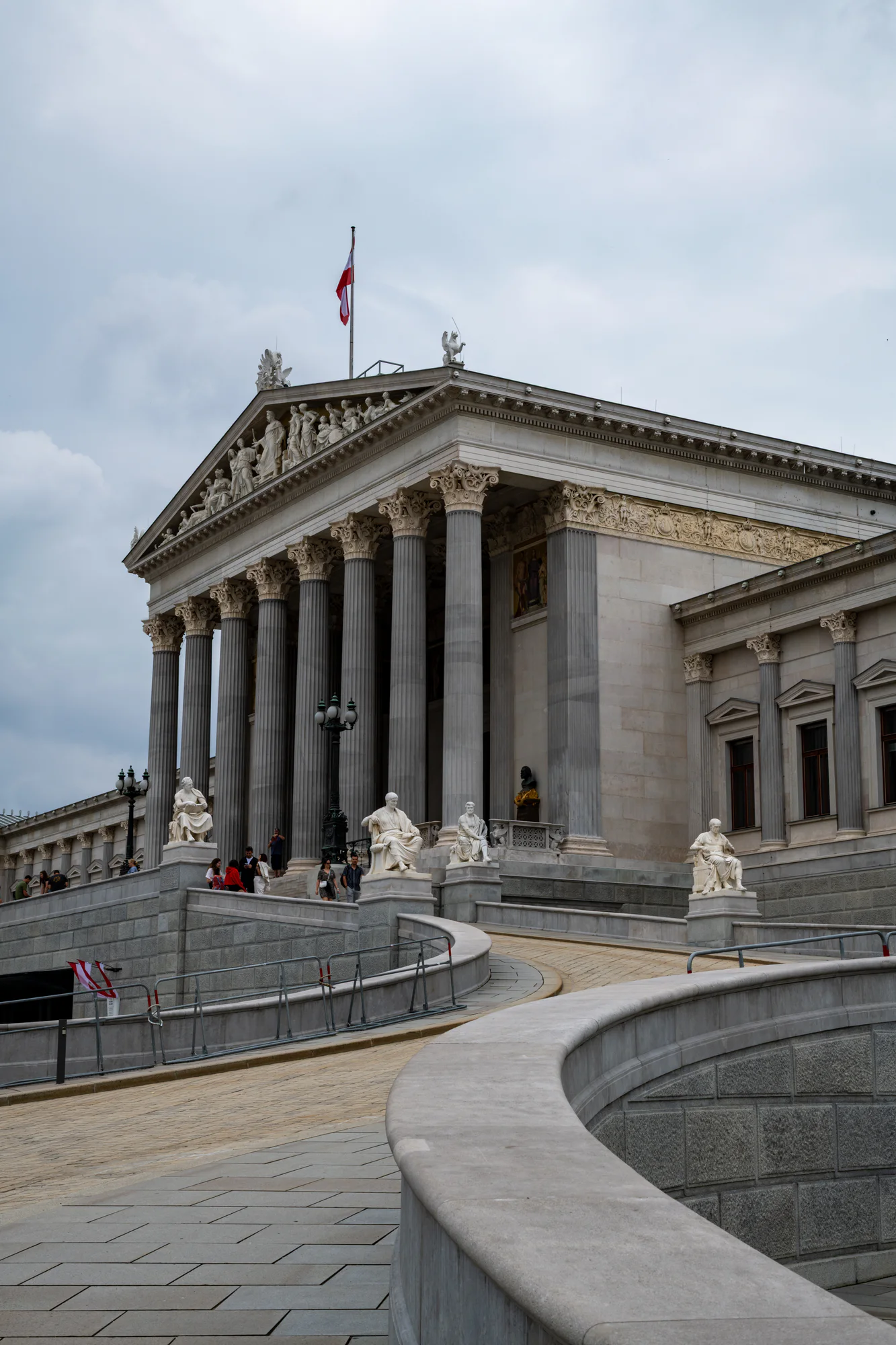
Austrian Parliament
The Austrian Parliament gives the Ringstrasse a deliberately classical face. Columns, a broad symmetrical composition and sculptural groups connect a functioning parliamentary building with an architectural language drawn from ancient Greece, creating a sharp contrast with the nearby Neo-Gothic City Hall.
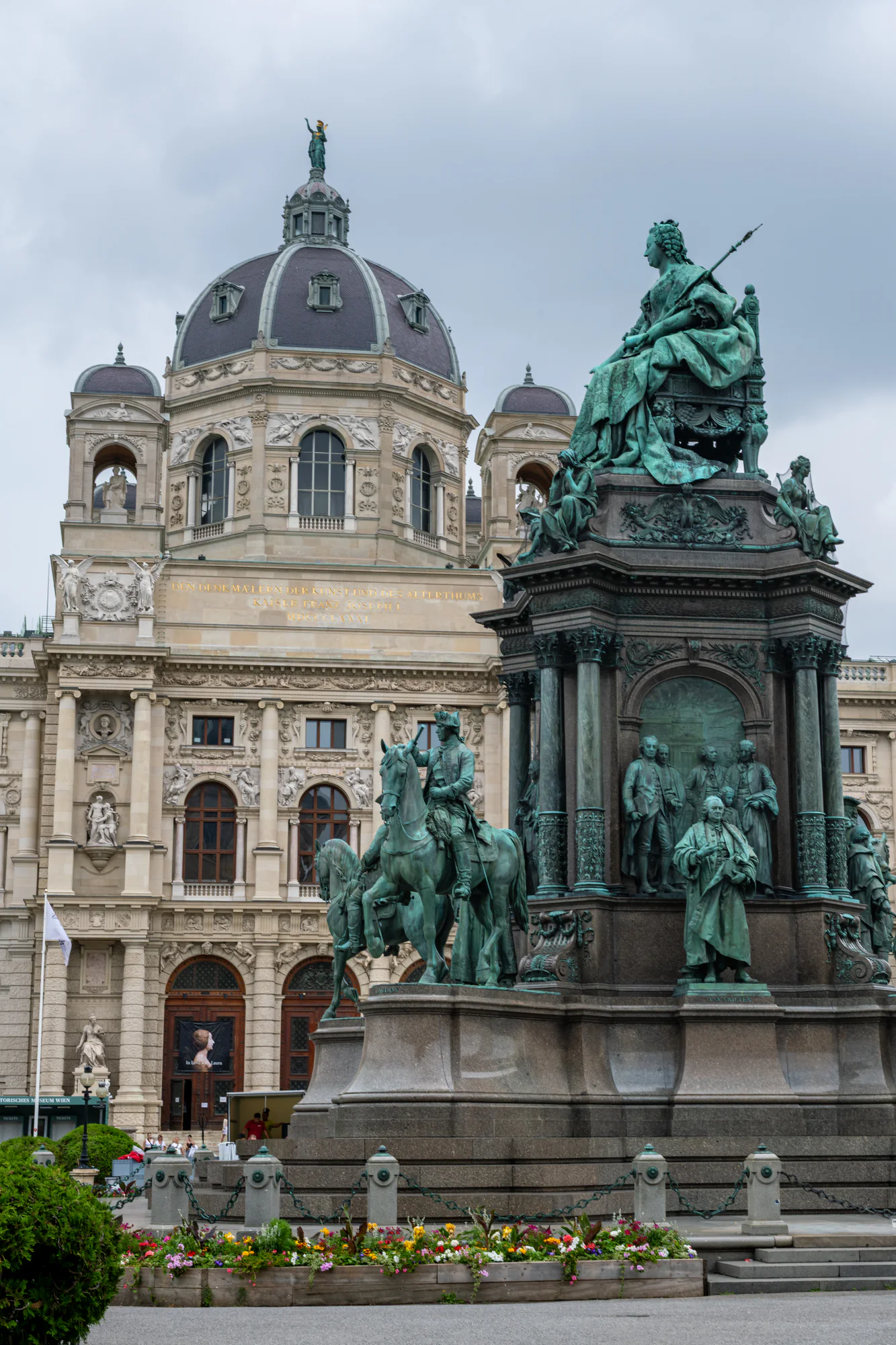
Maria-Theresien-Platz
Maria-Theresien-Platz is a place to read architecture as an ensemble. The Kunsthistorisches Museum and Natural History Museum face one another across the gardens and the monument to Maria Theresa, turning a public square into a carefully organised meeting of sculpture, planting and monumental façades.
Churches
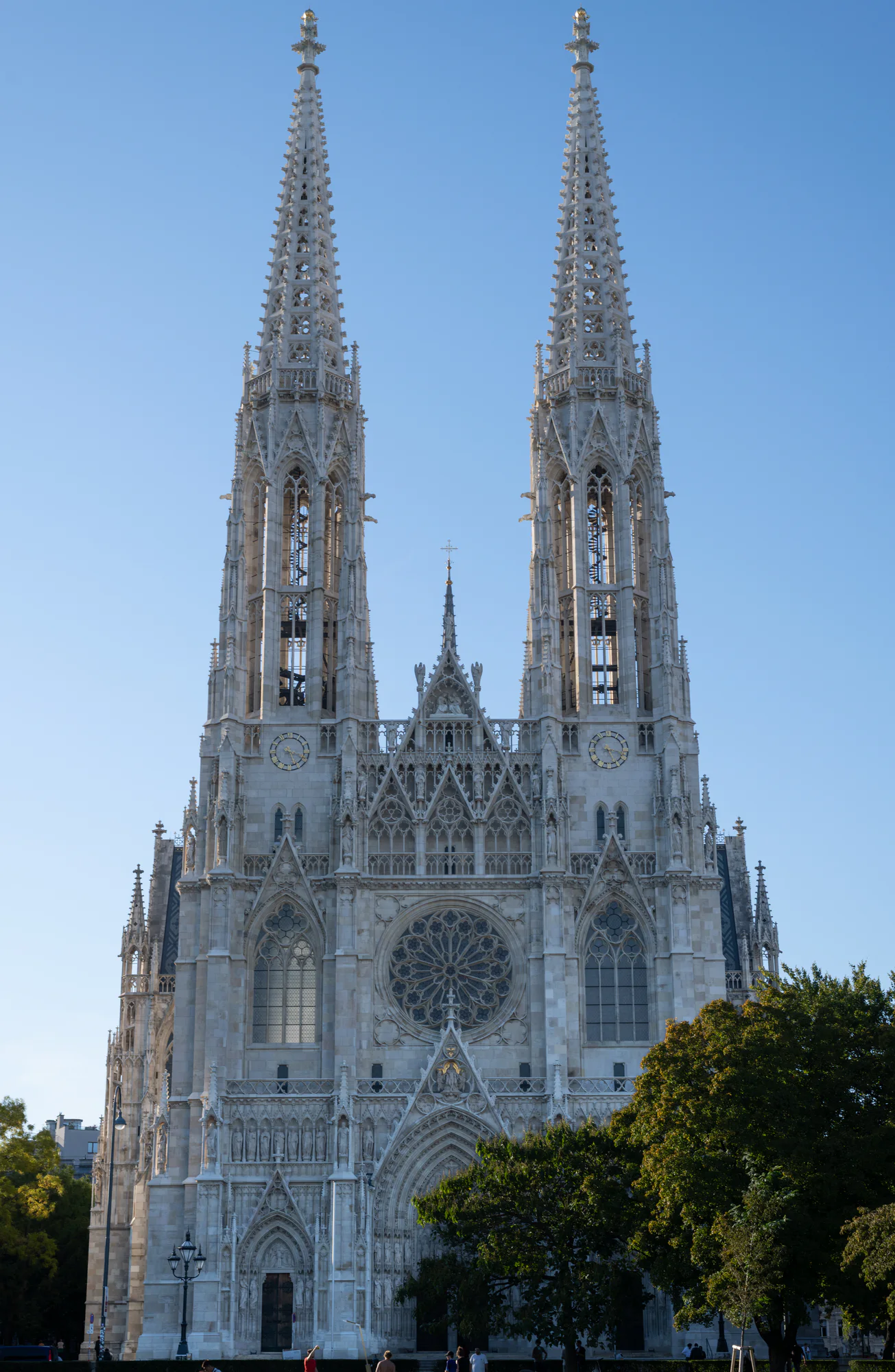
Votive Church
The Votive Church gives the northern edge of Vienna’s centre a paired-spire silhouette. Its Neo-Gothic architecture links the Ringstrasse era with the language of medieval cathedrals, while the open surroundings allow the building to be read at a different scale from St Stephen’s dense inner-city setting.
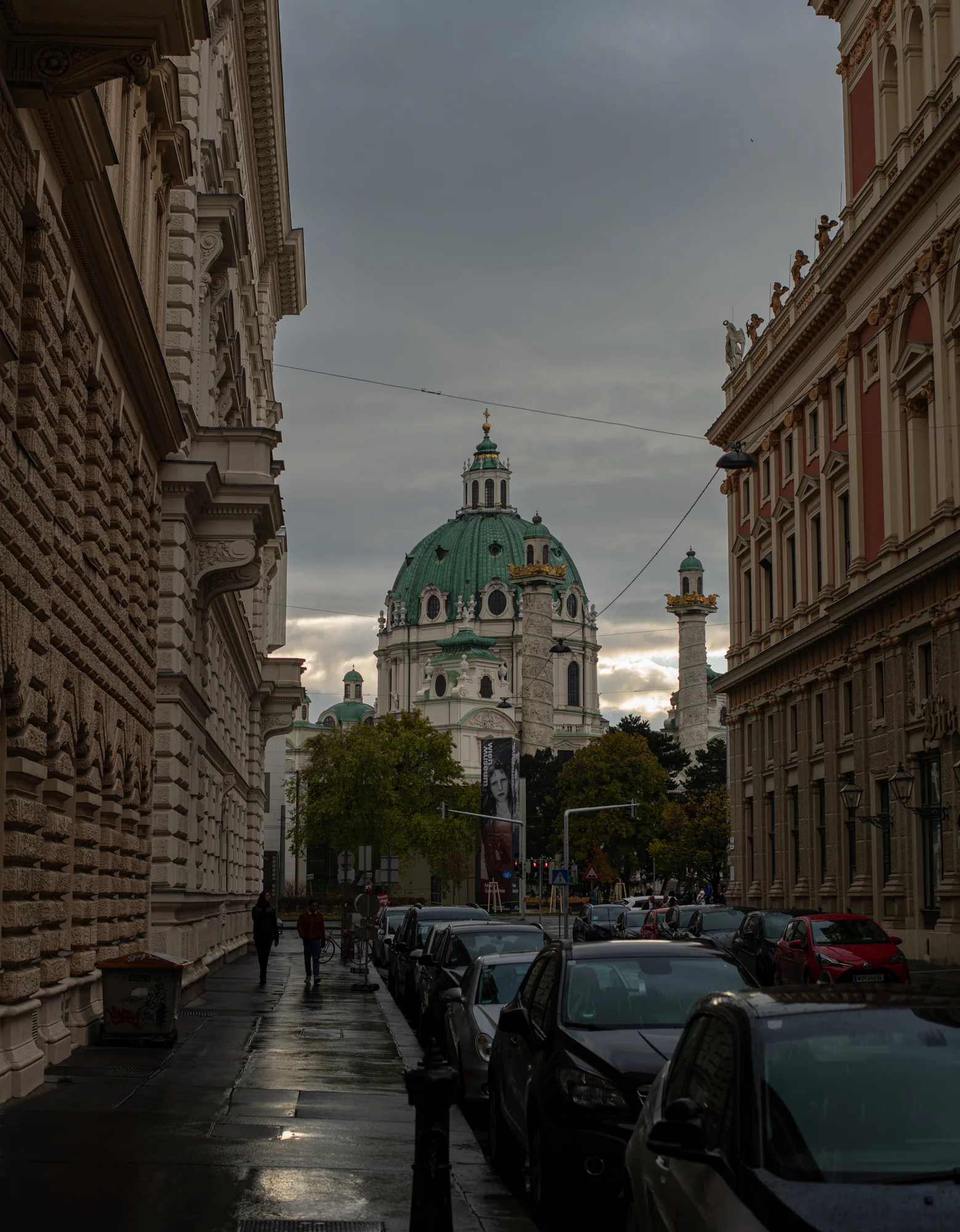
Karlskirche
At Karlsplatz, the Karlskirche brings a broad Baroque composition to an open urban setting. Its dome, temple-like portico and two large relief-covered columns give the eye several distinct forms to follow, making the church a subject for both a full architectural view and closer studies.
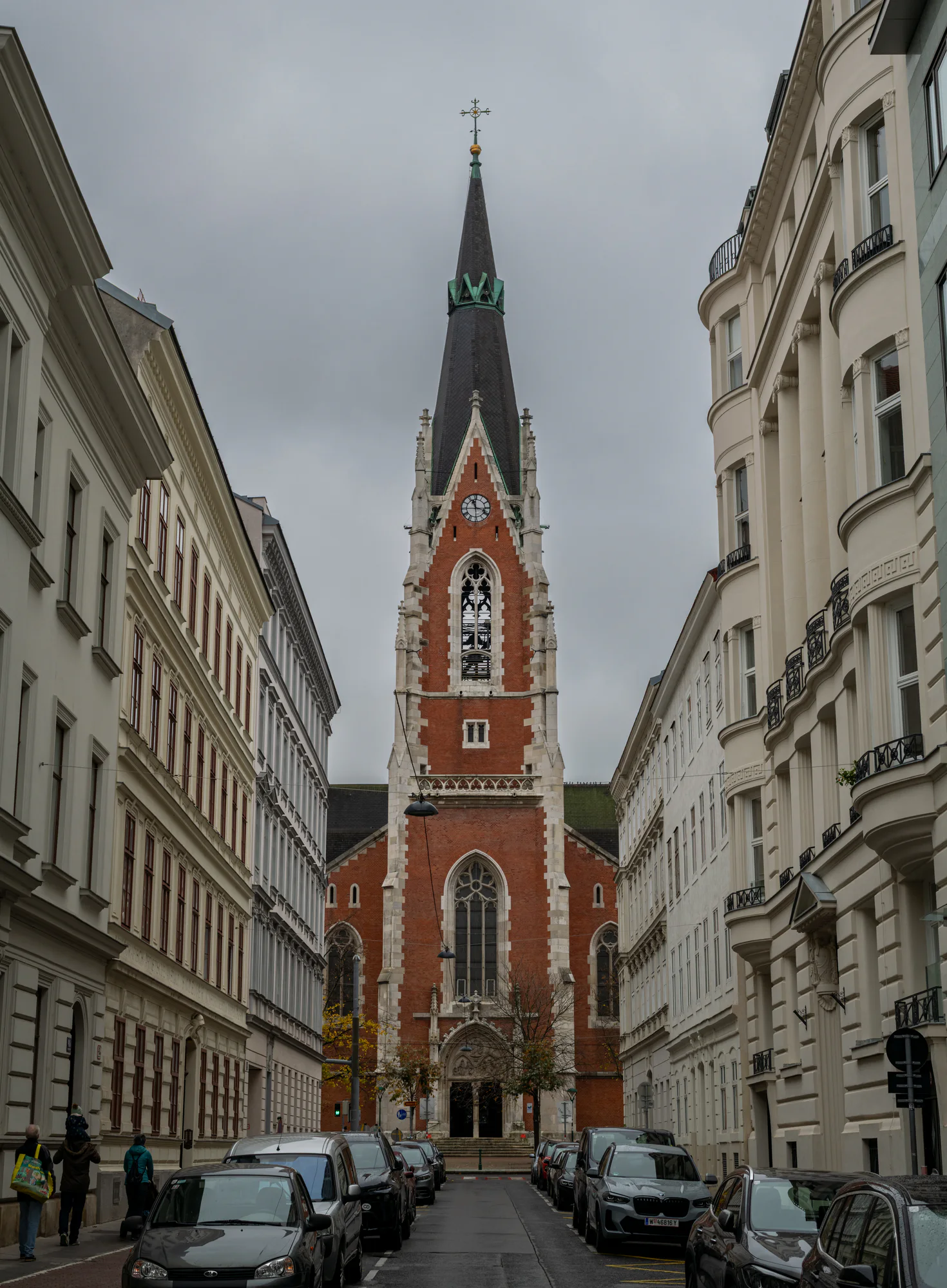
St Elisabeth Church
St Elisabeth Church rises above St.-Elisabeth-Platz in Vienna’s Wieden district, near the main railway station. Its red-brick tower, pale stone details and narrow spire bring Gothic Revival architecture into a residential setting. The photograph approaches the church through a corridor of neighbouring façades.
Gardens and contemporary architecture
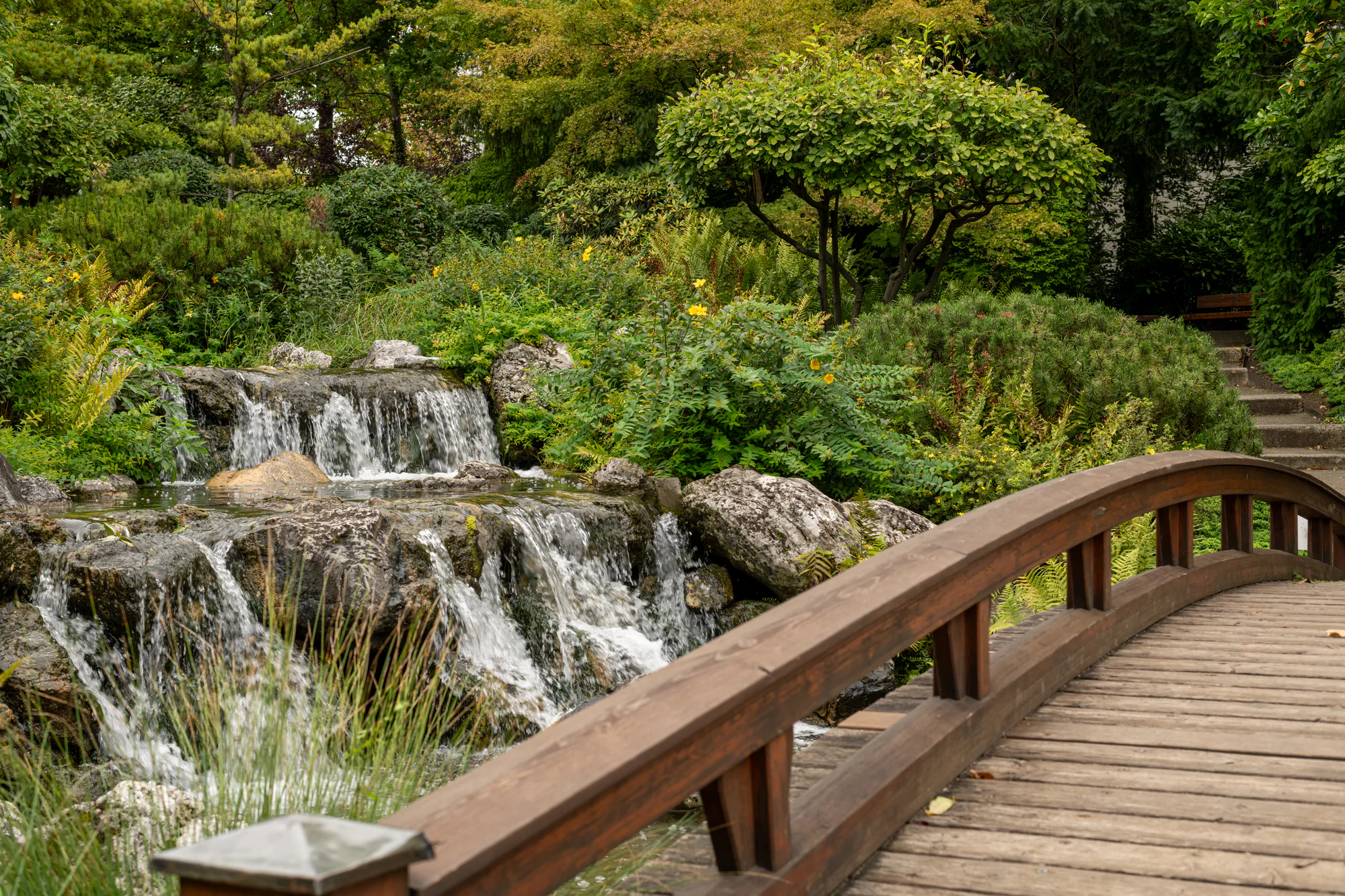
Setagayapark
Setagayapark offers a quieter scale of Vienna: a Japanese garden in Döbling where water, stones, planting and small structures form a sequence of close views. The photographs extend the city collection beyond its monumental centre to a place shaped for attentive looking.
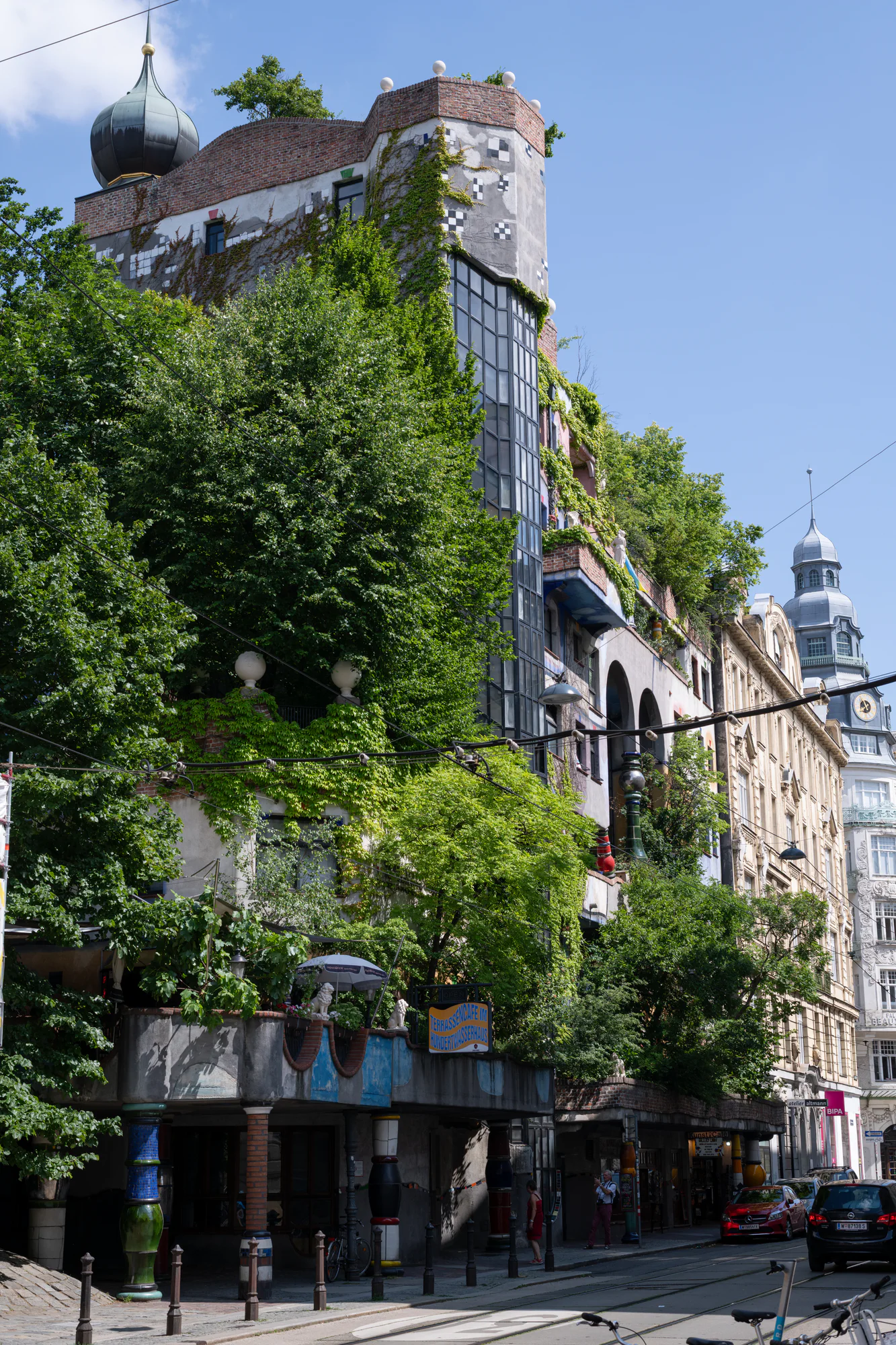
Hundertwasserhaus
Hundertwasserhaus makes the inhabited façade a subject in its own right. Colour, uneven divisions, individual windows and vegetation give this municipal housing development a character very different from Vienna’s regular palace fronts and Ringstrasse monuments.
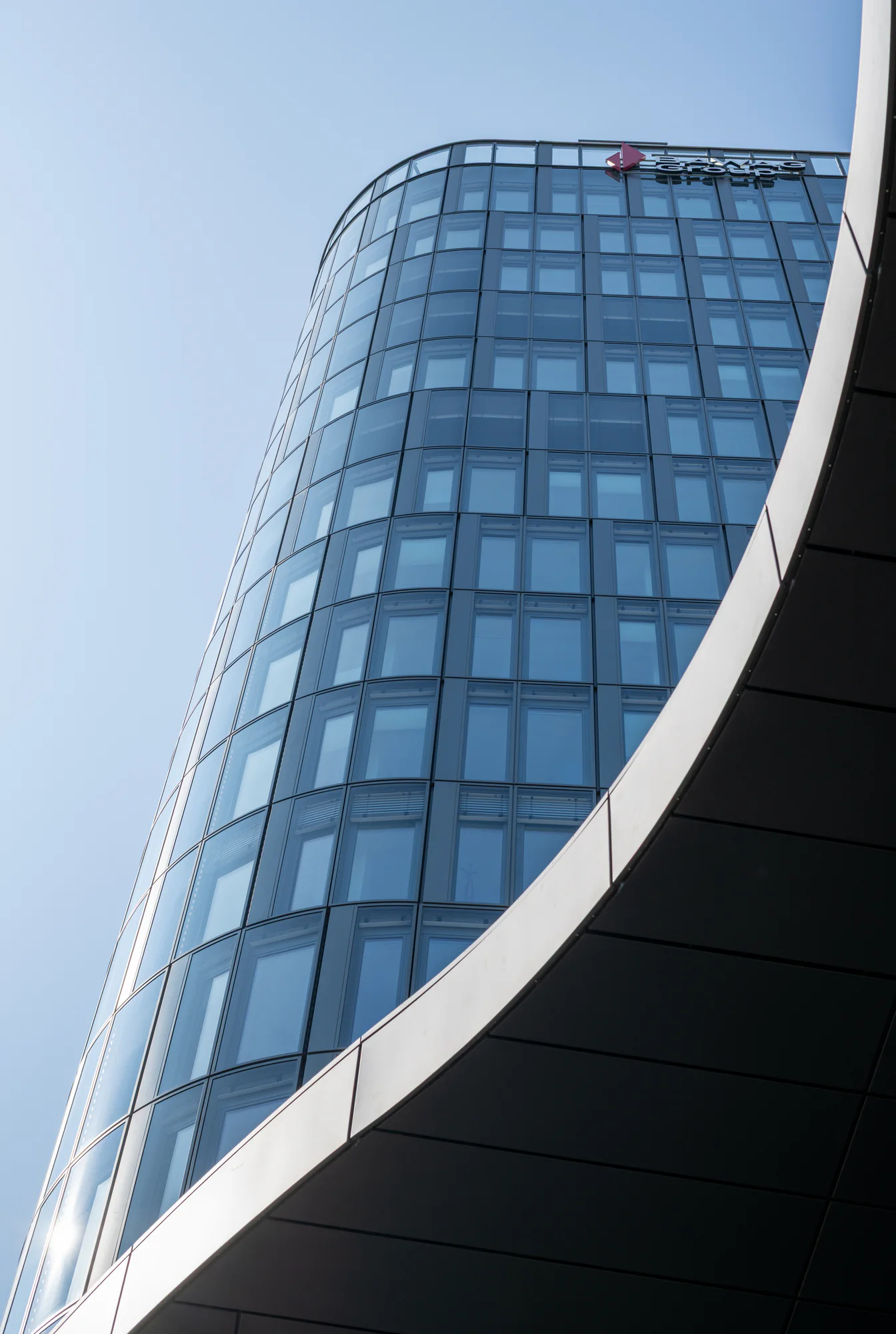
THE ICON VIENNA
Beside Vienna’s Hauptbahnhof, THE ICON VIENNA adds a contemporary architectural chapter to the city collection. Curving façades and repeated glazed elements belong to a working station district, offering a different subject from the imperial palaces and nineteenth-century monuments of the centre.
Visit plan
Plan your visits
Explore the streets around St Stephen’s Cathedral, then plan separate visits to the palace gardens at Belvedere and Schönbrunn.
Open the Vienna visit plan ↗02 · Photography locationStreet Views Around St Stephen’s CathedralExplore the streets around St Stephen’s Cathedral for views of Vienna’s architecture and everyday life.
Explore the cathedral and its surroundings ↗Photographic archive
Vienna · Photographic archive
Vienna · Photographic archiveBrowse original Vienna photographs by subject and viewpoint. Open a photograph for its story, full image, capture details and printing or licensing information.Photographic archive ↗Photography notes
Looking closer at Vienna
At Schönbrunn, compare the palace’s long horizontal façade with the rise towards the Gloriette. From the pool below the colonnade, water, garden paths and the skyline form distinct layers.
At Belvedere, the garden unfolds across three terraces between the two palaces. In calm conditions, the pool south of Upper Belvedere can reflect the palace façade. Moving along the water changes the balance between the building and its reflection.
Around Stephansplatz, look for the pattern of the cathedral’s tiled roof and glimpses of the tower between neighbouring façades. Leave room in the frame for people crossing the square: their movement brings everyday Vienna into the architectural view.
Before you visit
Check each venue’s website for current opening times, admission details, access and photography rules before you go.
St Stephen’s Cathedral
St Stephen’s Cathedral stands on Stephansplatz in Vienna’s historic centre. Its surviving Romanesque west front includes the Giant’s Door and the lower parts of the two western towers, while later Gothic building work shaped much of the cathedral familiar today. The steep tiled roof is one of its most recognisable features. Seen through the surrounding streets, roof patterns, stonework and changing perspectives offer different ways to read the building.
Explore the landmarkExplore the cathedral, South and North Towers and catacombs, with links to current visiting times, tours and tickets. Find information about entrances, stairs and lifts, admission arrangements, dress requirements, tripods and permissions for interior photography.
St Stephen’s Cathedral — official visitor information St Stephen’s Cathedral — accessibility and photography FAQSchönbrunn Palace
Schönbrunn Palace and its gardens form one of Vienna's defining historic ensembles. The main palace lies on the central garden axis, with formal grounds rising to the Gloriette on the hill behind it. The Gloriette was built in 1775 and its elevated terrace provides a broad view back across the palace, gardens and Vienna skyline. The long perspective makes the relationship between the former imperial residence and the surrounding city especially clear.
Explore the landmarkThe official website lists palace tours and tickets, current palace and park opening times, directions and accessibility information.
Schönbrunn Palace — Official websiteBelvedere Palace
Upper Belvedere forms part of the palace and garden complex commissioned by Prince Eugene of Savoy and designed by Johann Lukas von Hildebrandt. Completed in 1723, it stands above the main garden, whose three terraces connect it with Lower Belvedere. The garden’s formal layout, designed by Dominique Girard, uses clipped planting, water basins, steps and sculpture to organise the slope. From this position, the cascade carries the eye towards the elevated palace and makes the terraced design easy to follow. It is a view of architecture and garden planned to be experienced together.
Explore the landmarkThe museum’s official website presents its collections and exhibitions, tickets, opening times, and practical information for visiting Upper Belvedere and the gardens.
Belvedere Palace — Official websiteGloriette
The Gloriette stands on the hill above Schönbrunn Palace. Built in 1775 to designs by Johann Ferdinand Hetzendorf von Hohenberg, the early Neoclassical structure gives the garden a prominent architectural endpoint. Its central section takes the form of a triumphal arch, with open arcades extending to either side. The imperial eagle on a globe crowns the centre, above the inscription and glazed hall. The building also serves as a vantage point over the palace gardens and Vienna. In this photograph, the view is turned towards the Gloriette itself, bringing its colonnade, hillside setting and reflection into the same frame.
Read the photograph’s storyThe official page explains the Gloriette’s architecture and history, with links to current viewing-terrace opening times and admission information.
Gloriette — Official websitePhoto story
Vienna along the Danube
Travel routes
Routes through Vienna
Along the Danube
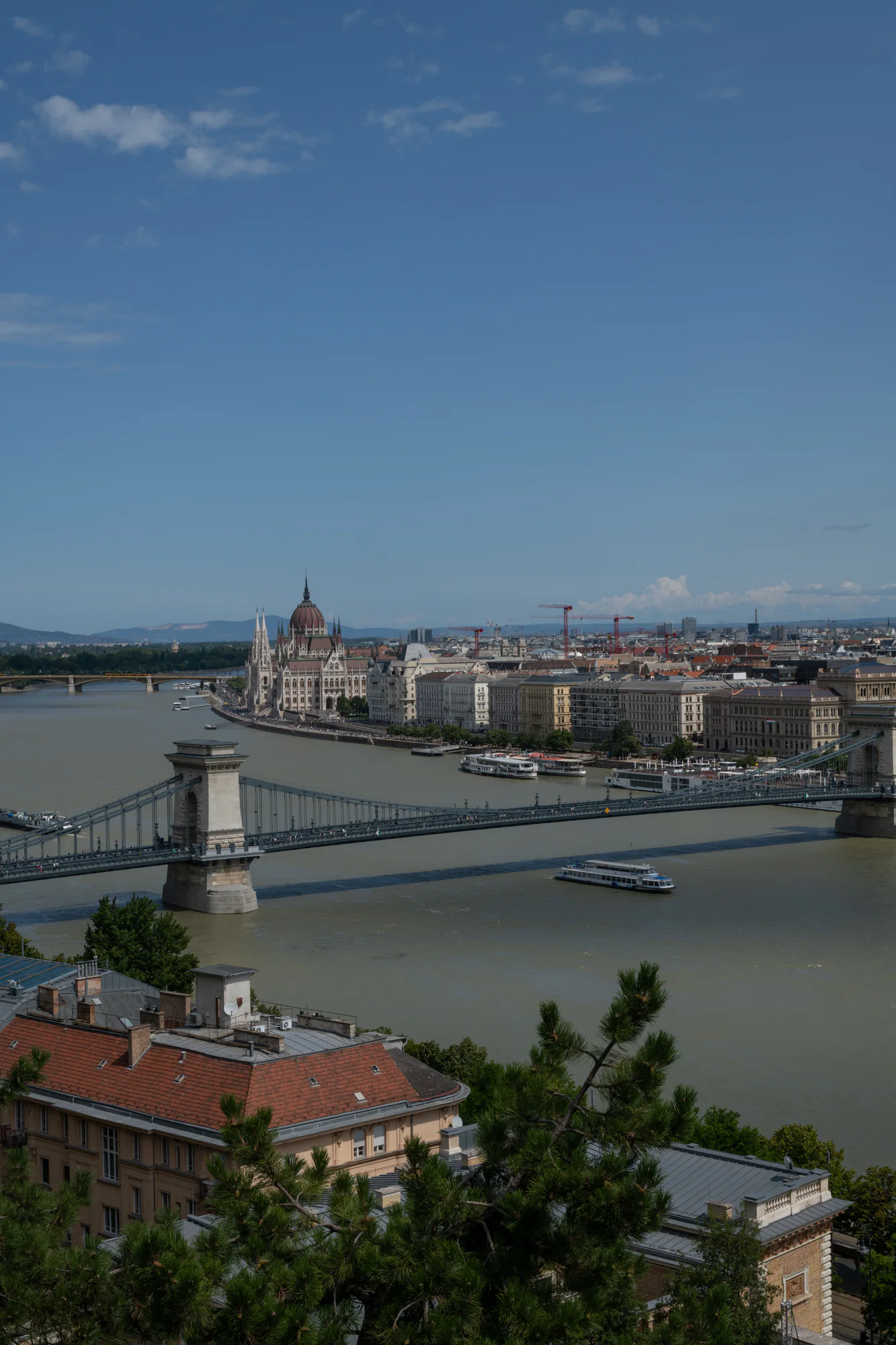
A compact journey linking Vienna and Bratislava by rail or seasonal boat, with enough time to notice how the same river changes character.
Explore the Danube route ↗Central Europe by Rail
A slow rail route from Prague through Vienna to Budapest, balancing monumental architecture with river light and unhurried street time.
Explore the rail route ↗Across the archive
Explore the archive.
Continue through Austria, follow a rail journey or explore architecture elsewhere in Europe.
Austria
Explore Austria through photography of Vienna and landmark guides, with routes along the Danube and across Central Europe.
Open chapter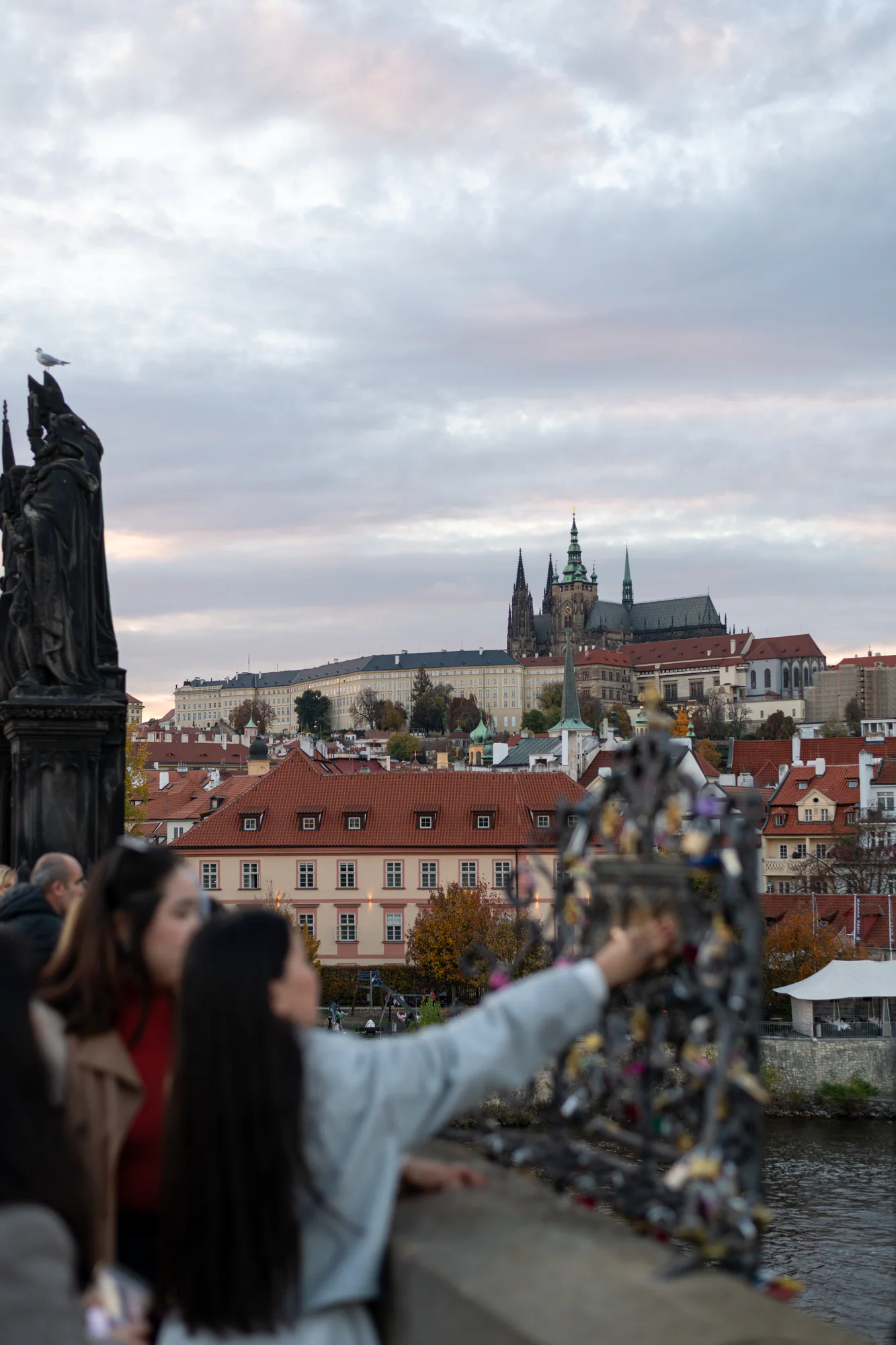
Prague, Vienna and Budapest by rail
Compare three capitals on a rail journey through Central Europe, with Vienna as the middle stop.
See Vienna in the rail itineraryArchitecture across Europe
Compare façades, materials and urban spaces across the European photography collection.
Explore the architecture collectionVienna
- Location
- Vienna, Austria
- Coordinates
- 48.2082° N · 16.3738° E
- Series
- Europe In Frame