Vienna · Austria
Maria-Theresien-Platz
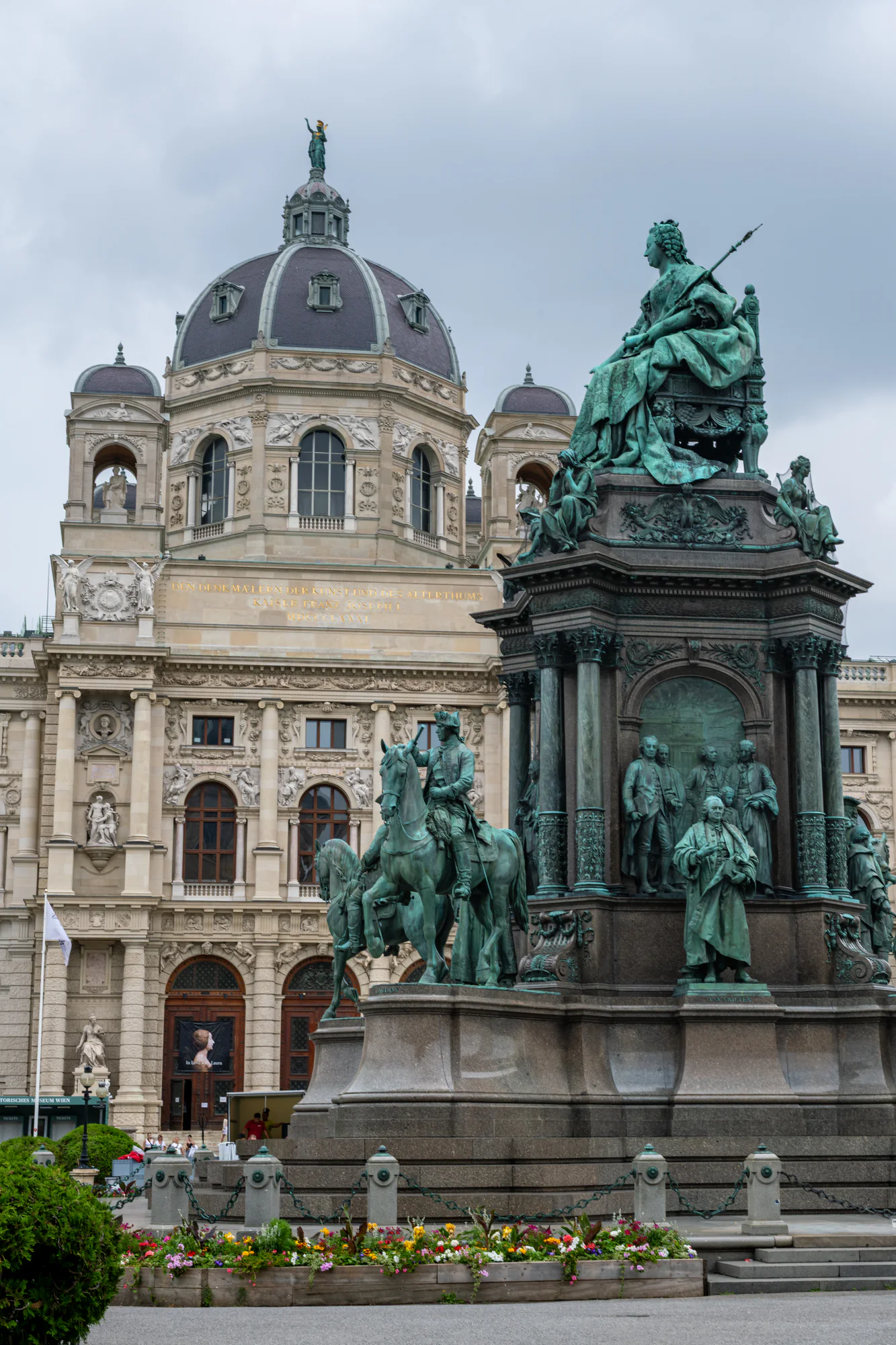
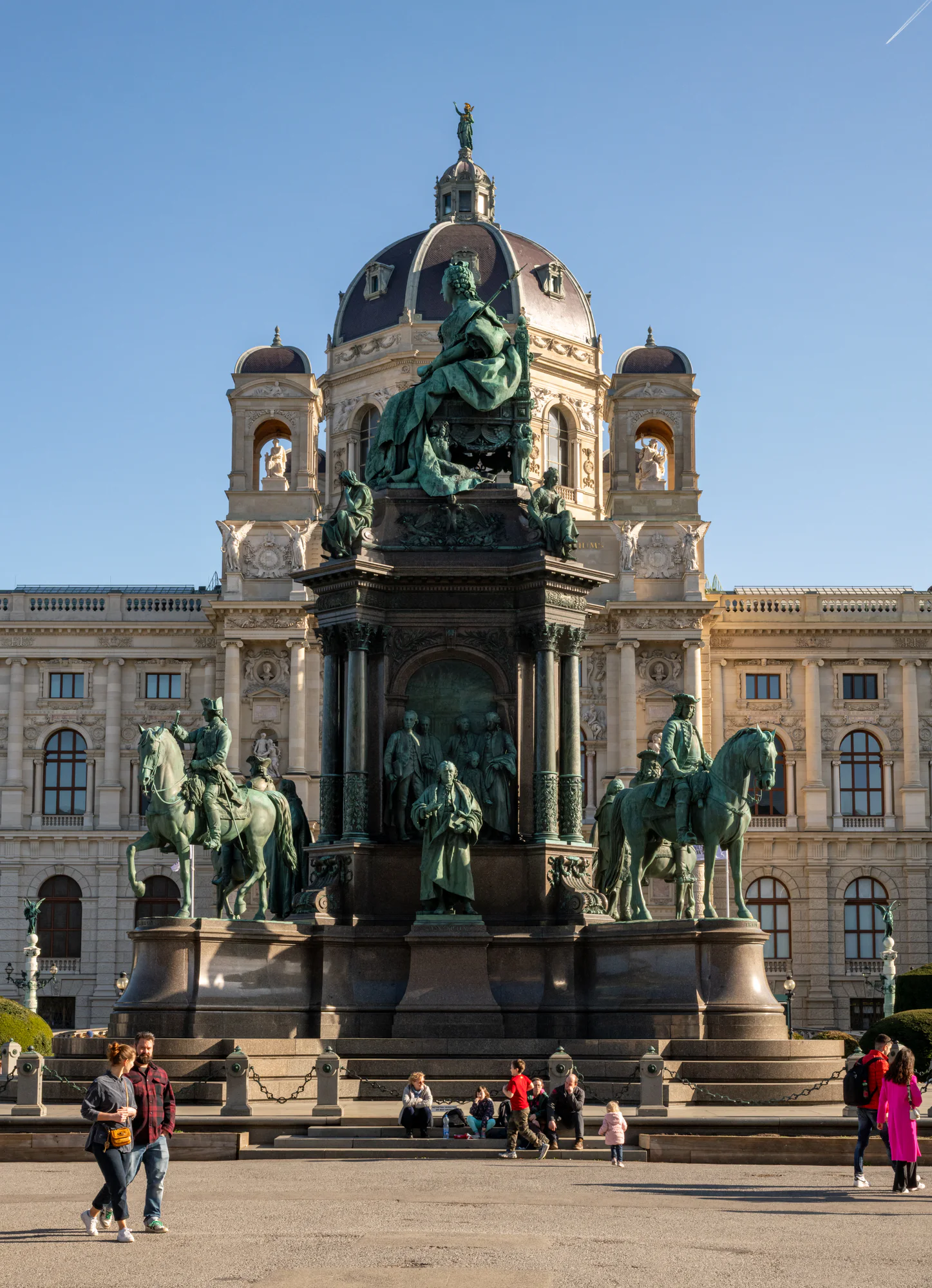
Maria-Theresien-Platz is a place to read architecture as an ensemble. The Kunsthistorisches Museum and Natural History Museum face one another across the gardens and the monument to Maria Theresa, turning a public square into a carefully organised meeting of sculpture, planting and monumental façades.
© Serhii Danyliuk / Europe In Frame ·Read the photograph’s story ↗
Vienna
About the place
16.3605° E
Austria’s federal building authority describes the square as part of the nineteenth-century imperial forum project associated with the Neue Burg and the two museums. Its name comes from the monument designed by Kaspar von Zumbusch. The seated ruler rises above figures representing aspects of her era, making the centre a work to examine as well as a point of orientation.
The square’s force lies in relationships rather than in a single isolated object. The facing museum buildings establish a strong axis, while paths and planted sections divide the foreground into smaller spaces. Moving around the monument changes which museum becomes the backdrop and how much of the ensemble can be understood in one frame.
For the photographic sequence, compare views that hold the central monument against a museum with views that give the gardens more space. Sculpture can provide a human scale within the large composition. The photographs may emphasise different parts of the setting, but the map treats them as related views of one public place.
Vienna
Location
Maria-Theresien-Platz, 1010 Vienna
Open the Vienna map ↗Vienna · places and perspectives
Vienna on the map
Explore Vienna’s photographed places, from the historic centre and Schönbrunn to Setagayapark and Hauptbahnhof. Choose a place, then select one of its photographs or open the landmark guide. Markers identify places; an approximate location is labelled explicitly.

Drag with a mouse, use two fingers on a phone, or use the controls. With the map focused, use arrow keys, + / − and Home. Scrolling the page does not zoom the map.
Maria-Theresien-Platz
Maria-Theresien-Platz
Maria-Theresien-Platz is a place to read architecture as an ensemble. The Kunsthistorisches Museum and Natural History Museum face one another across the gardens and the monument to Maria Theresa, turning a public square into a carefully organised meeting of sculpture, planting and monumental façades.
- St Stephen’s Cathedral Through Vienna’s Streets ↗
- St Stephen’s Cathedral Roof and Stone Tracery ↗
- St Stephen’s Cathedral Stonework from Below ↗
- St Stephen’s Spire above the Street ↗
- Schönbrunn Palace from the Gloriette ↗
- Schönbrunn Palace across the Forecourt ↗
- Schönbrunn Palace and Vienna from the Hill ↗
- Schönbrunn through the Neptune Fountain ↗
- A Horse-Drawn Carriage in Schönbrunn Courtyard ↗
- Upper Belvedere and the Garden Cascade ↗
- Upper Belvedere beyond the Formal Garden ↗
- Upper Belvedere beside the Reflecting Pool ↗
- A Belvedere Sphinx beneath a Green Dome ↗
- A Belvedere Sphinx against the Palace Façade ↗
- Sphinxes along the Belvedere Terrace ↗
- A Belvedere Fountain Looking towards the City ↗
- Setagayapark Bridge beside the Waterfall ↗
- A Shaded Path through Setagayapark ↗
- Water and Flowers in Setagayapark ↗
Photographic archive
Maria Theresa Monument and the Museum Dome
Photographic archive
Vienna
Before you visit
The square and the two museums are separate visitor experiences. Check each museum’s official website for its own collections, admission and photography rules; a visit to the public square does not include museum entry.
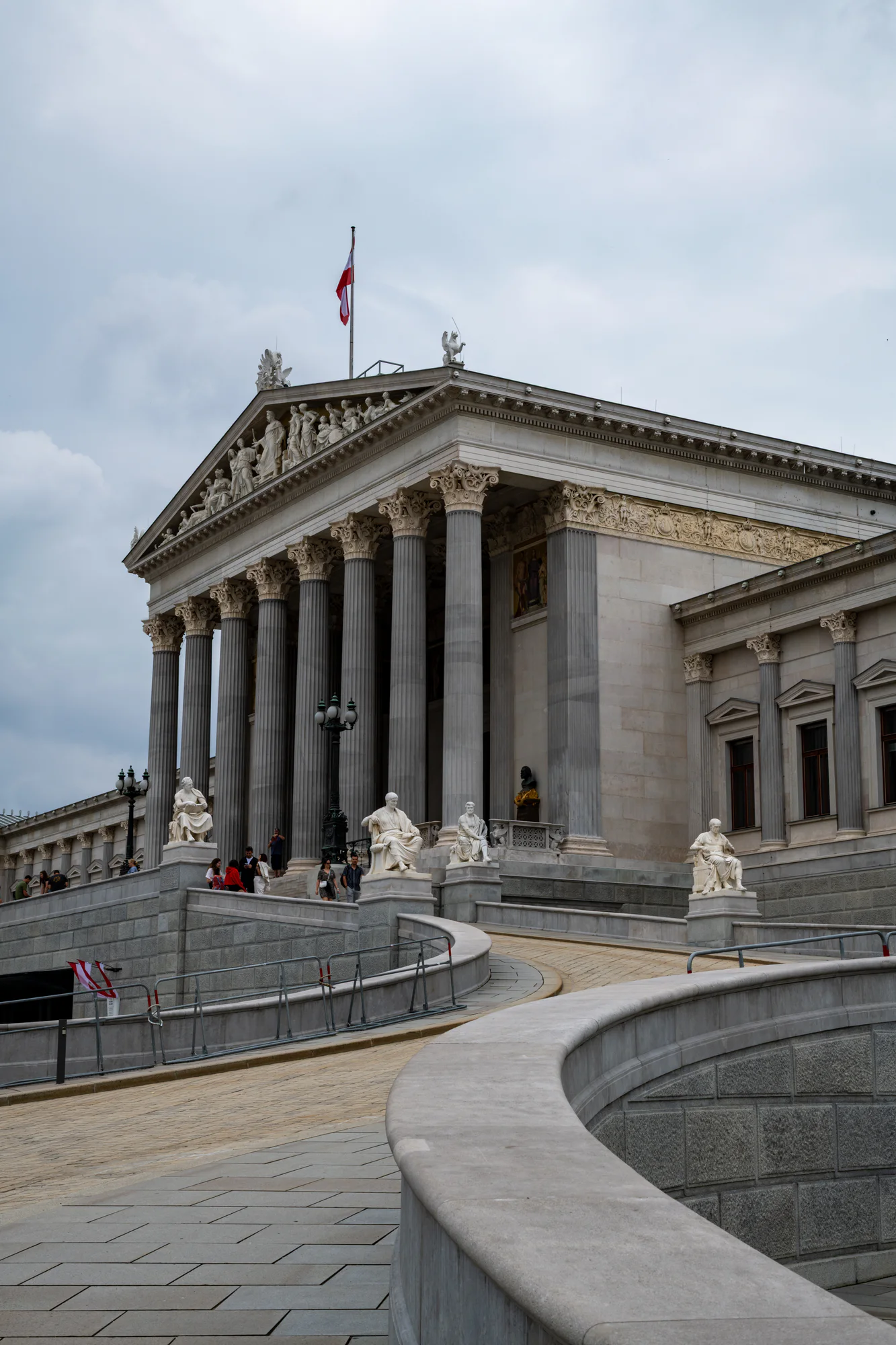
Temporary events, works and seasonal installations can change the layout or available sightlines. Use current official information when planning a specific visit, leave circulation routes clear and avoid assuming that the conditions in a historical photograph will be repeated. The Hofburg and Parliament pages provide useful surrounding context.
- burghauptmannschaft.at
Maria-Theresien-Platz ↗
Photography locations