Vienna · Austria
Schönbrunn Palm House
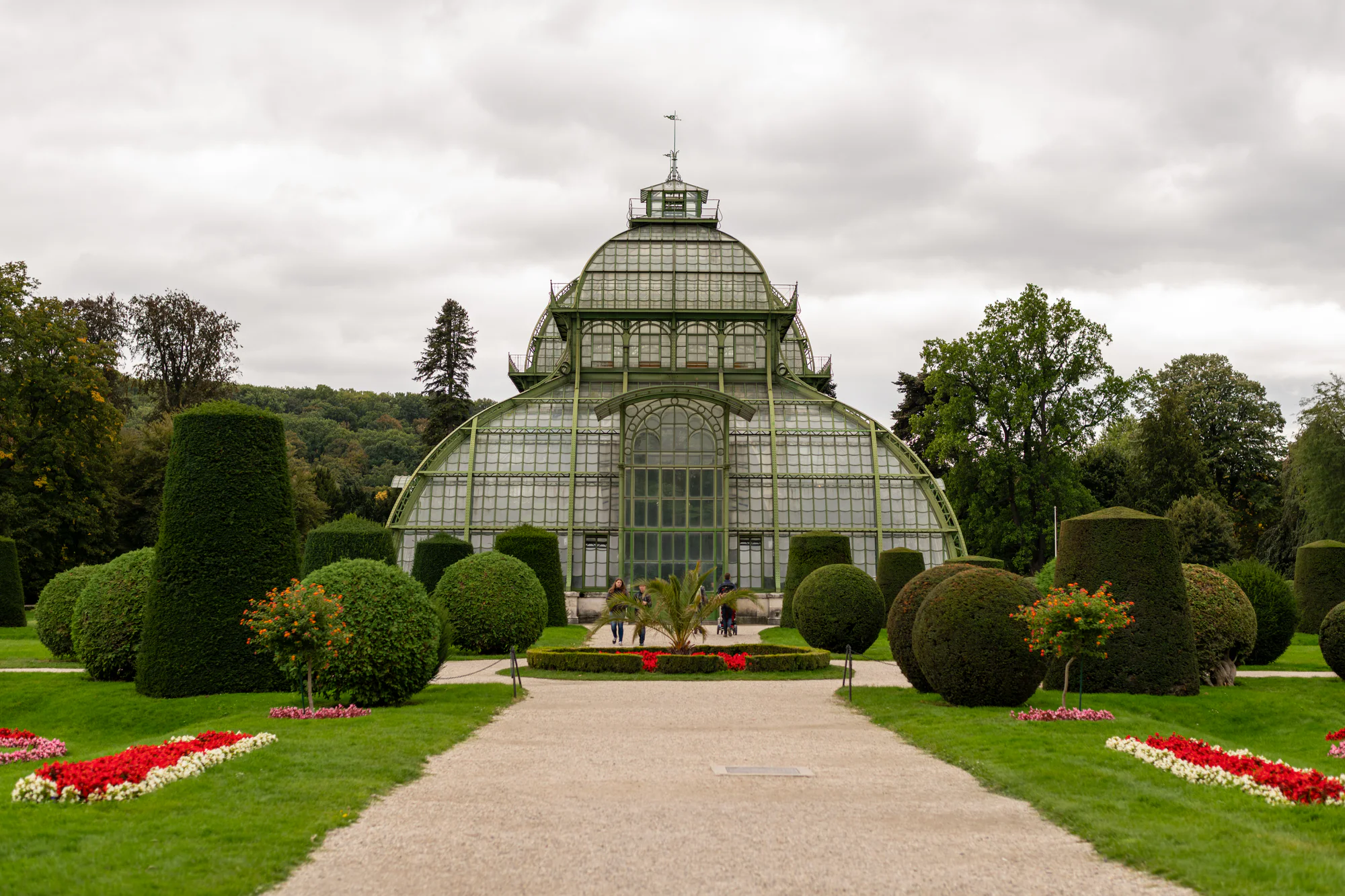
The Palm House brings a different kind of architecture to Schönbrunn: a long sequence of curved iron ribs and glass, made for plants rather than court ceremony. Its slender framework offers a useful counterpoint to the palace façades and the park’s formal avenues.
© Serhii Danyliuk / Europe In Frame ·Read the photograph’s story ↗
Vienna
About the place
16.3029° E
Built in 1881–1882 to plans by Franz Xaver Segenschmid, the Palm House occupies the site of an earlier Dutch botanical garden. Its central pavilion and two lower side pavilions form a connected composition. The structure belongs to the age of engineered glasshouses, when advances in iron construction made large, carefully controlled growing spaces possible.
The official park description identifies three climatic zones within the building. Their different conditions explain the division into pavilions: the architecture is a working environmental system as well as a visual landmark. Curves in the exposed framework give rhythm to the glass surfaces and keep the large volume from reading as a single heavy block.
For a photographic visit, read the building in stages. A broad view explains the relationship between the pavilions; a closer frame can follow the repeating ribs, changes in glass reflection and the meeting of structure and planting. The interest lies in how a practical glasshouse becomes part of the garden landscape.
Vienna
Location
Schönbrunn Palace Park, 1130 Vienna
Open the Vienna map ↗Vienna · places and perspectives
Vienna on the map
Explore Vienna’s photographed places, from the historic centre and Schönbrunn to Setagayapark and Hauptbahnhof. Choose a place, then select one of its photographs or open the landmark guide. Markers identify places; an approximate location is labelled explicitly.

Drag with a mouse, use two fingers on a phone, or use the controls. With the map focused, use arrow keys, + / − and Home. Scrolling the page does not zoom the map.
Schönbrunn Palm House
Schönbrunn Palm House
The Palm House brings a different kind of architecture to Schönbrunn: a long sequence of curved iron ribs and glass, made for plants rather than court ceremony. Its slender framework offers a useful counterpoint to the palace façades and the park’s formal avenues.
- St Stephen’s Cathedral Through Vienna’s Streets ↗
- St Stephen’s Cathedral Roof and Stone Tracery ↗
- St Stephen’s Cathedral Stonework from Below ↗
- St Stephen’s Spire above the Street ↗
- Schönbrunn Palace from the Gloriette ↗
- Schönbrunn Palace across the Forecourt ↗
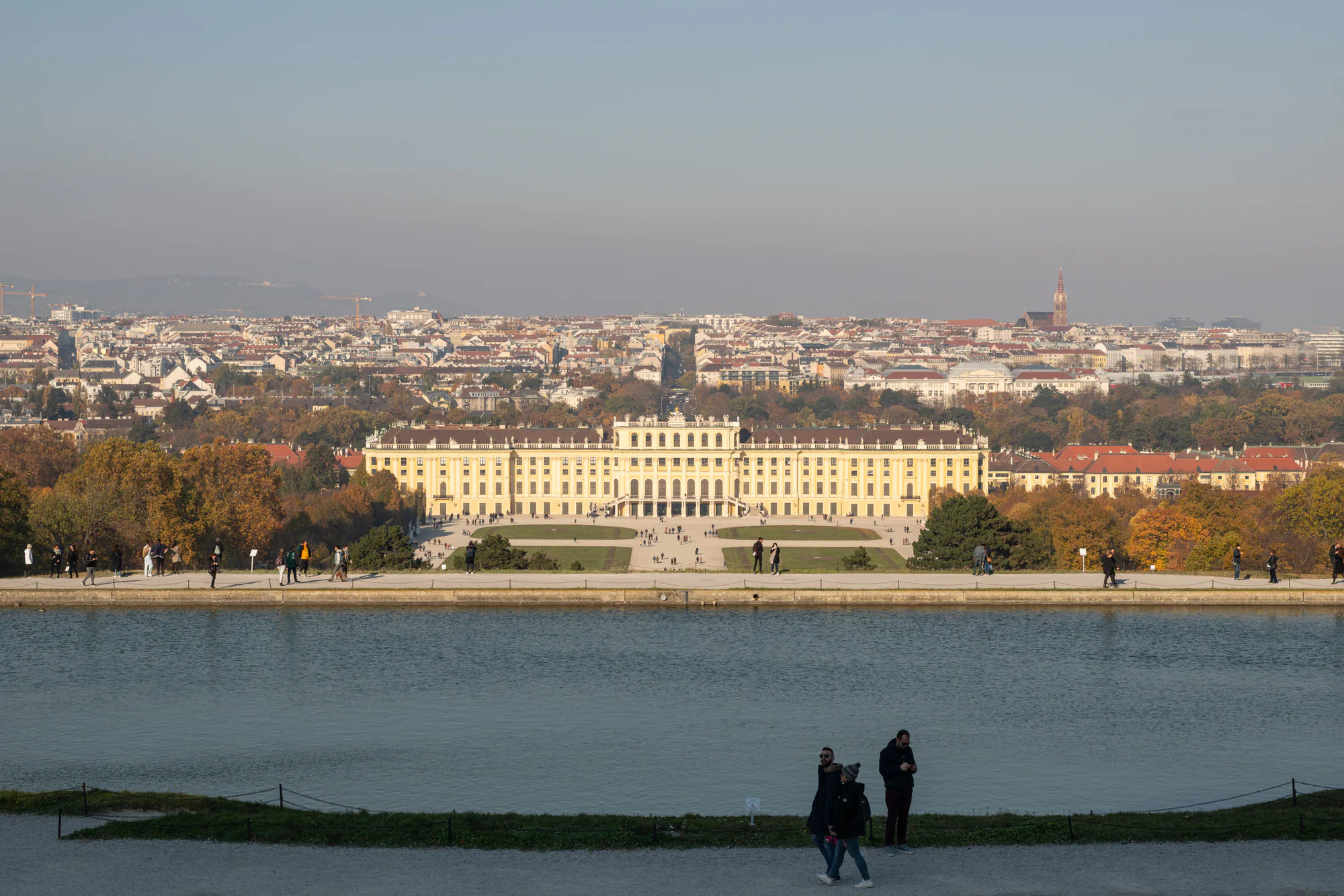
- Schönbrunn Palace and Vienna from the Hill ↗
- Schönbrunn through the Neptune Fountain ↗
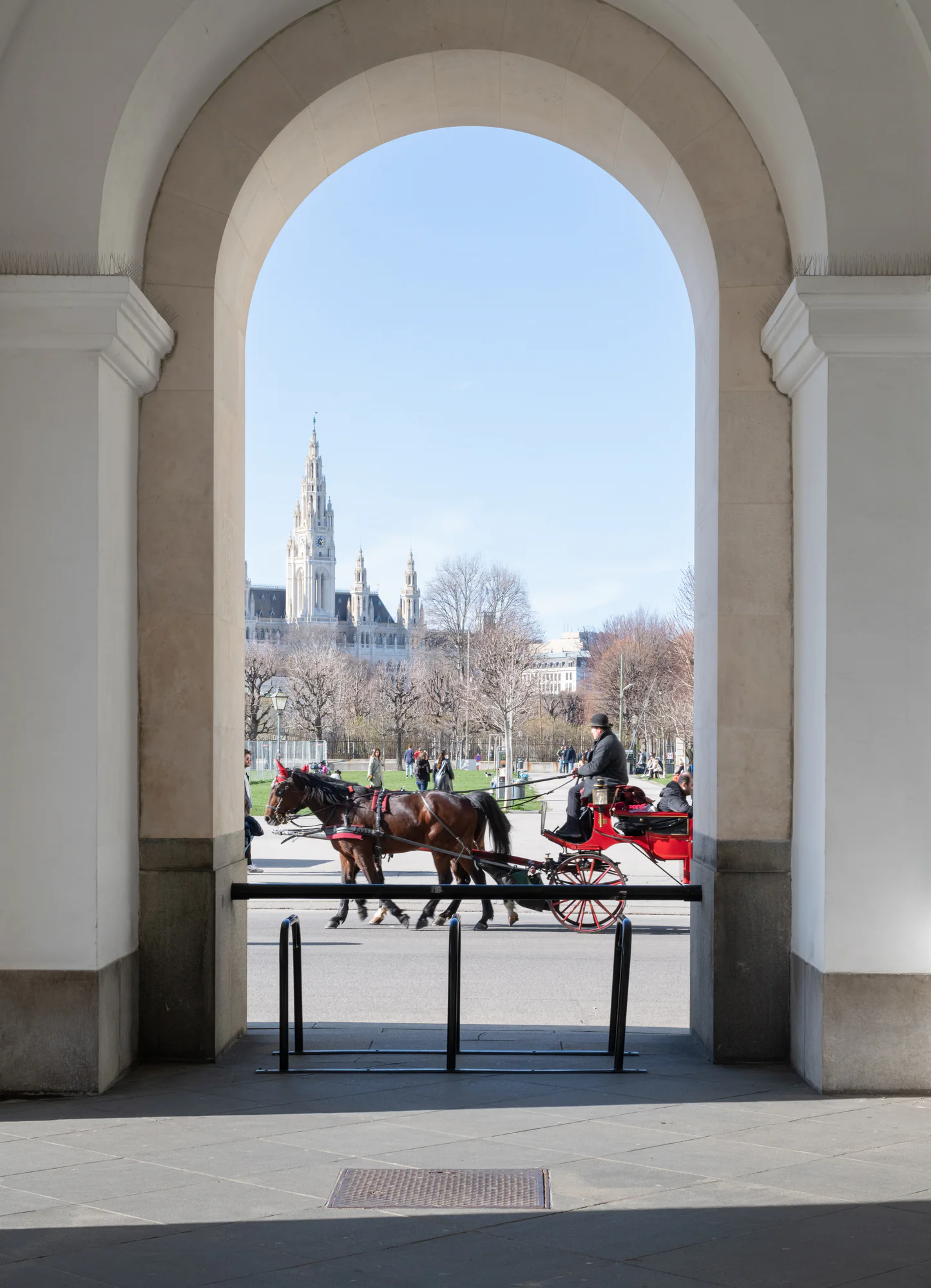
- A Horse-Drawn Carriage in Schönbrunn Courtyard ↗
- Upper Belvedere and the Garden Cascade ↗
- Upper Belvedere beyond the Formal Garden ↗
- Upper Belvedere beside the Reflecting Pool ↗
- A Belvedere Sphinx beneath a Green Dome ↗
- A Belvedere Sphinx against the Palace Façade ↗
- Sphinxes along the Belvedere Terrace ↗
- A Belvedere Fountain Looking towards the City ↗
- Setagayapark Bridge beside the Waterfall ↗
- A Shaded Path through Setagayapark ↗
- Water and Flowers in Setagayapark ↗
Photographic archive
Schönbrunn Palm House between Clipped Hedges
Vienna
Before you visit
Plan the Palm House as its own stop within Schönbrunn’s grounds. Being able to walk through the surrounding park does not establish access to the glasshouse interior: check the operator’s current visitor information and the park’s gate times before planning an indoor visit.
Allow other visitors to pass on the paths, and follow any rules for equipment and indoor photography. The palace, Palm House and Gloriette occupy different parts of a large site; this page links their photographs without presenting that sequence as a measured walking route.
- schoenbrunn.at
Schönbrunn Palm House ↗
Photography locations