Vienna · Austria
Hofburg
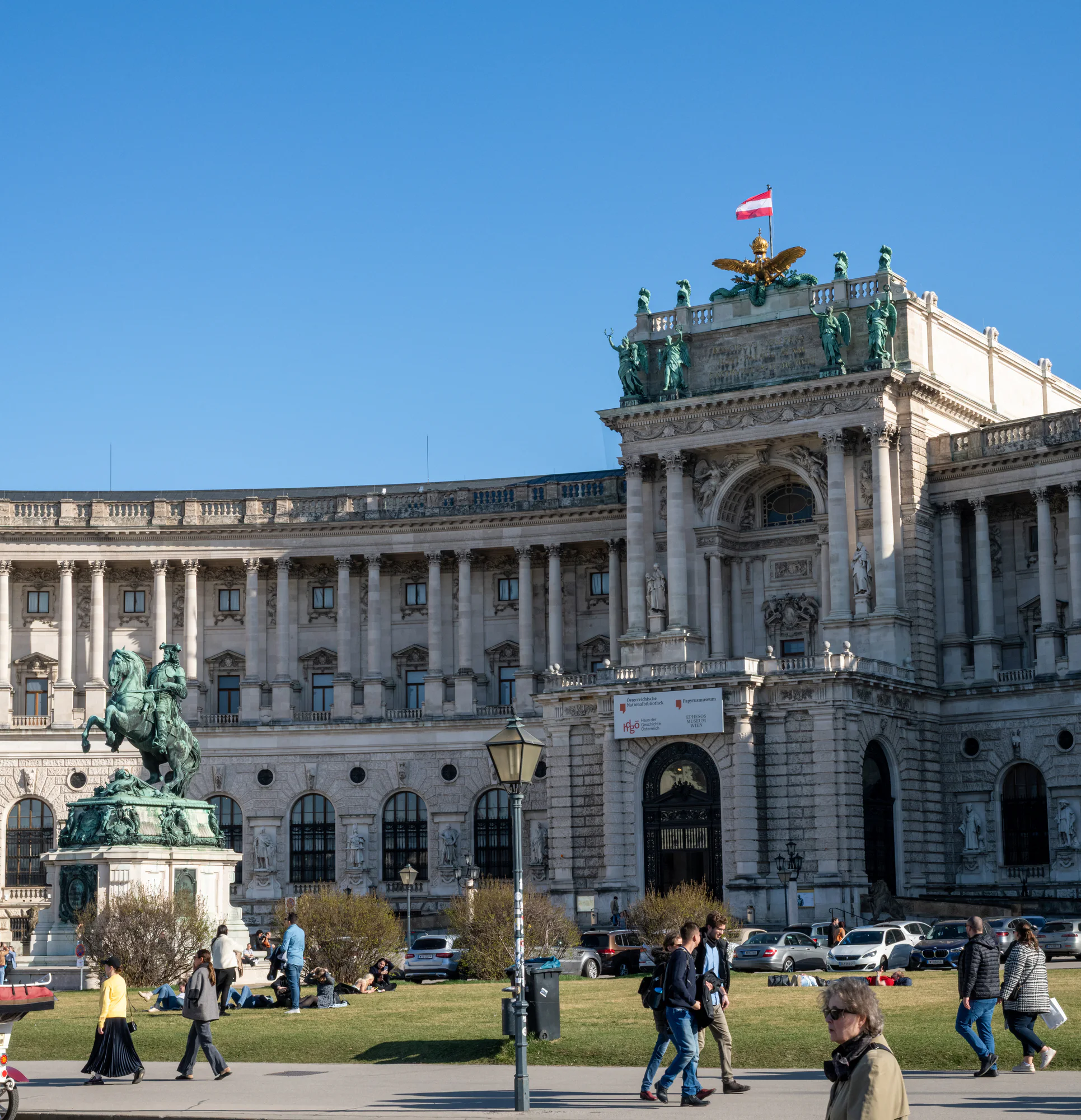
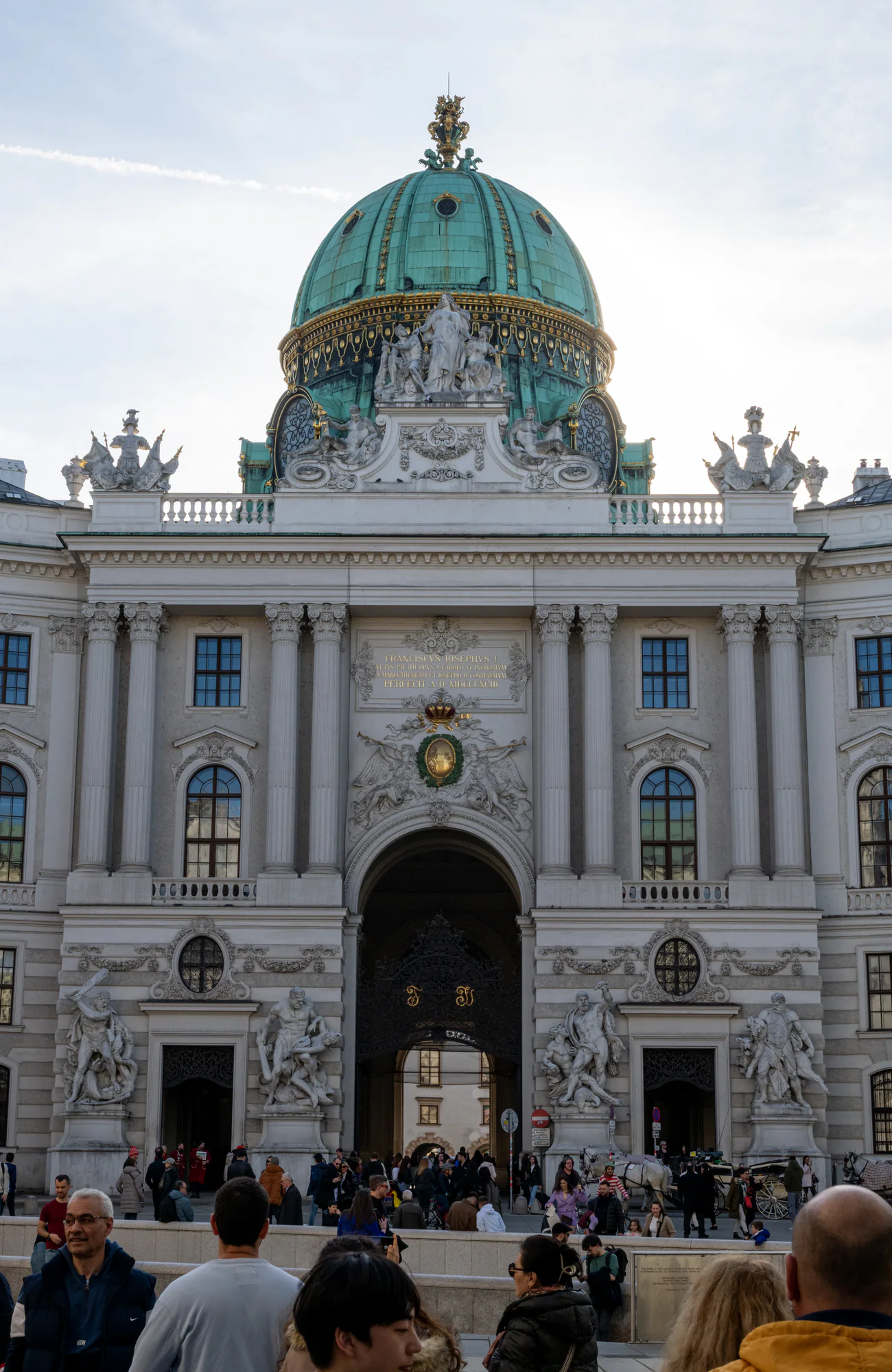
The Hofburg is best approached as a sequence of connected buildings and spaces. Courtyards, gates, domes and long façades reveal a palace complex that grew over centuries, rather than a monument designed to be understood from one viewpoint.
© Serhii Danyliuk / Europe In Frame ·Read the photograph’s story ↗
Vienna
About the place
16.3649° E
Beginning as a medieval fortified residence, the Hofburg expanded under successive Habsburg rulers and remained the monarchy’s political centre until 1918. Its official history describes buildings from different periods joined into an extensive, irregular complex. The architecture is therefore a record of accumulation: each part belongs to a particular phase, purpose and relationship with the city.
The later Michaelertrakt addresses the historic centre with a curving front and dome, while the Neue Burg faces the open space of Heldenplatz. Other passages lead into courtyards and towards institutions that occupy the former palace today. These shifts between enclosed and open space give a photographic sequence more substance than a single postcard view.
Compare the scale of an entrance or sculptural group with the larger façade behind it. Then step back to see how the same building defines a square or courtyard. The photographs in this collection form related architectural observations, not a claim that one ticket grants access to every wing, collection or working office in the complex.
Vienna
Location
Hofburg, 1010 Vienna
Open the Vienna map ↗Vienna · places and perspectives
Vienna on the map
Explore Vienna’s photographed places, from the historic centre and Schönbrunn to Setagayapark and Hauptbahnhof. Choose a place, then select one of its photographs or open the landmark guide. Markers identify places; an approximate location is labelled explicitly.

Drag with a mouse, use two fingers on a phone, or use the controls. With the map focused, use arrow keys, + / − and Home. Scrolling the page does not zoom the map.
Hofburg
Hofburg
The Hofburg is best approached as a sequence of connected buildings and spaces. Courtyards, gates, domes and long façades reveal a palace complex that grew over centuries, rather than a monument designed to be understood from one viewpoint.
- St Stephen’s Cathedral Through Vienna’s Streets ↗
- St Stephen’s Cathedral Roof and Stone Tracery ↗
- St Stephen’s Cathedral Stonework from Below ↗
- St Stephen’s Spire above the Street ↗
- Schönbrunn Palace from the Gloriette ↗
- Schönbrunn Palace across the Forecourt ↗
- Schönbrunn Palace and Vienna from the Hill ↗
- Schönbrunn through the Neptune Fountain ↗
- A Horse-Drawn Carriage in Schönbrunn Courtyard ↗
- Upper Belvedere and the Garden Cascade ↗
- Upper Belvedere beyond the Formal Garden ↗
- Upper Belvedere beside the Reflecting Pool ↗
- A Belvedere Sphinx beneath a Green Dome ↗
- A Belvedere Sphinx against the Palace Façade ↗
- Sphinxes along the Belvedere Terrace ↗
- A Belvedere Fountain Looking towards the City ↗
- Setagayapark Bridge beside the Waterfall ↗
- A Shaded Path through Setagayapark ↗
- Water and Flowers in Setagayapark ↗
Photographic archive
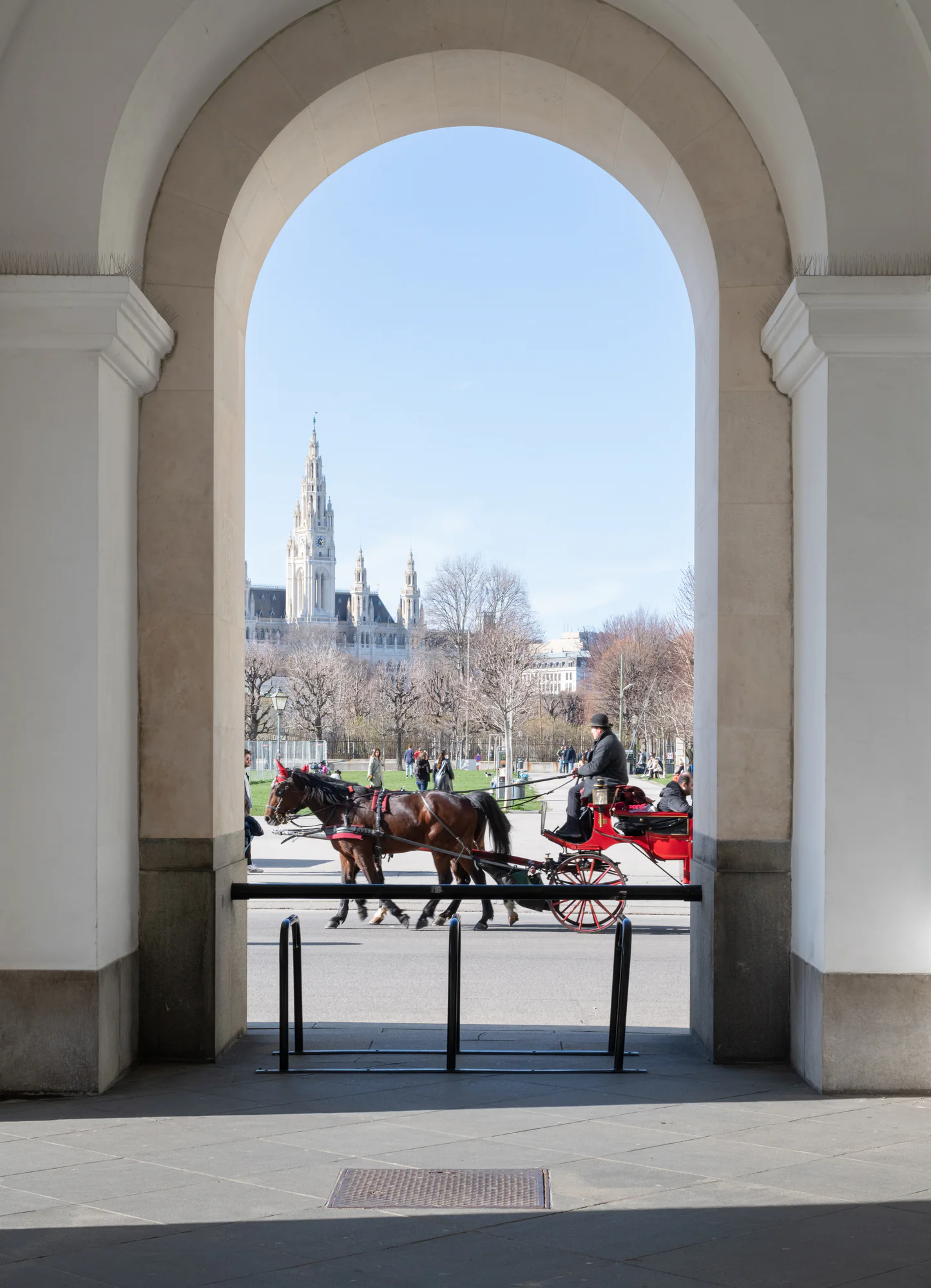
A Carriage Framed by a Hofburg Arch
Photographic archive
Vienna
Before you visit
Choose the institution or part of the Hofburg you want to visit before booking. The Sisi Museum and Imperial Apartments, National Library, Treasury and other collections have their own visitor arrangements. Check the relevant operator’s current official information and photography rules.
Public passages and squares remain working urban spaces. Keep entrances, security areas and routes used by other visitors clear. Use the map and the links back to the Vienna overview to understand the photographs in context; the complex’s reference marker is not an assertion of an exact camera position for every image.
- sisimuseum-hofburg.at
Hofburg ↗
Photography locations