Vienna · Austria
Vienna State Opera
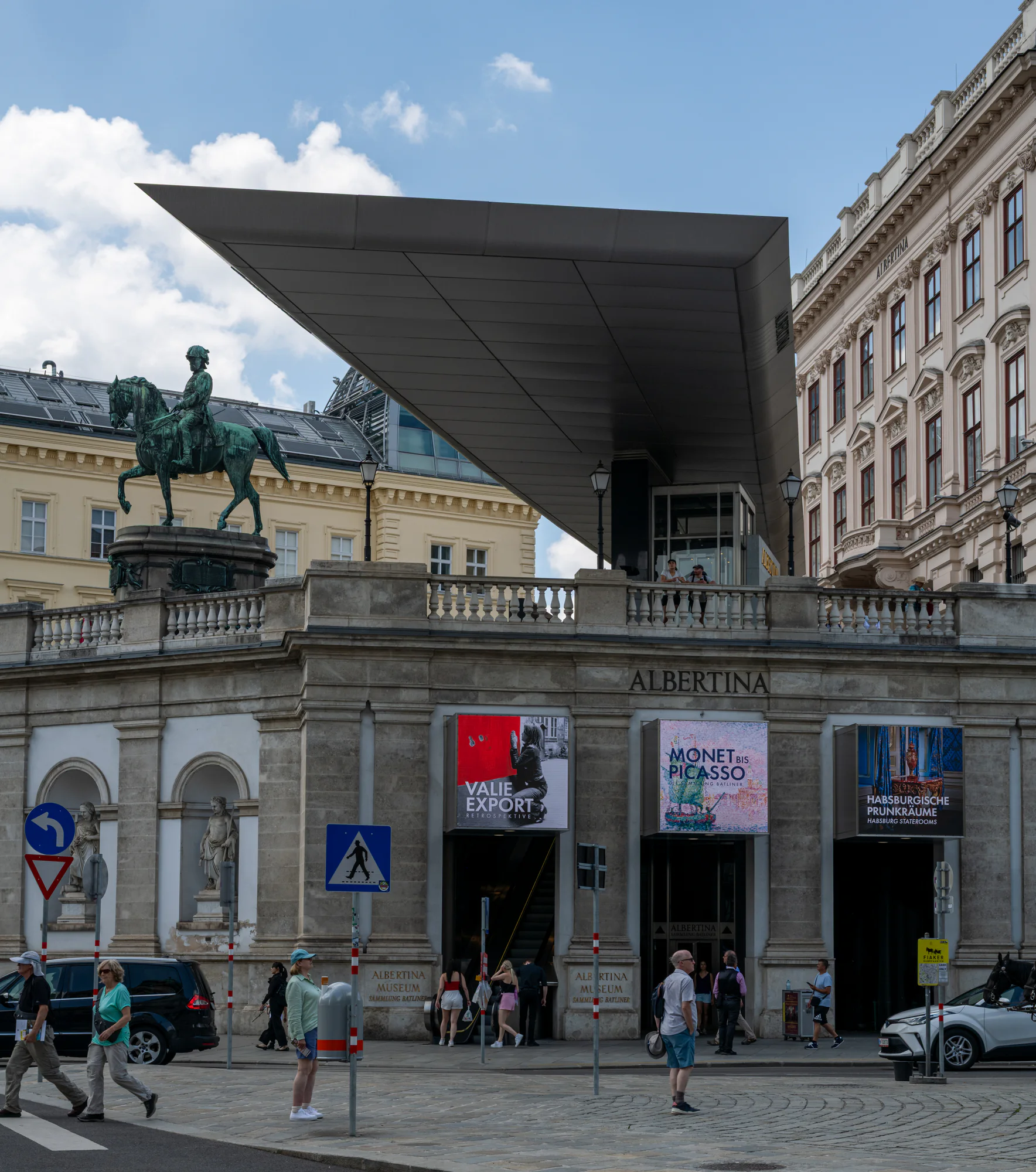
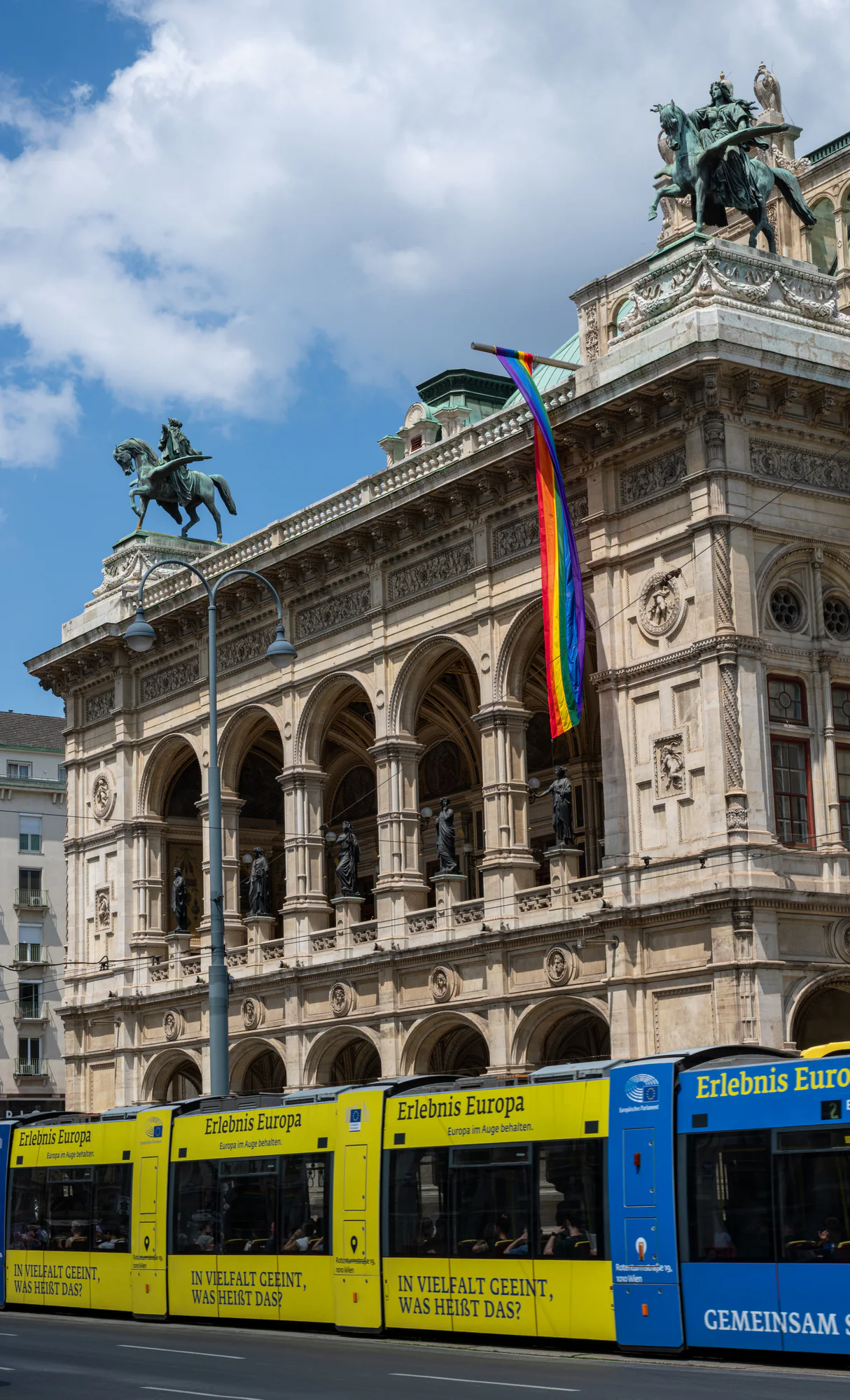
The Vienna State Opera occupies a hinge between the Ringstrasse and the older city. Its arcades, roofline and broad street setting make it an architectural subject as well as a performance venue, with the Albertina and the Hofburg providing nearby chapters in the same urban story.
© Serhii Danyliuk / Europe In Frame ·Read the photograph’s story ↗
Vienna
About the place
16.3691° E
The opera house emerged from the nineteenth-century transformation of Vienna after the demolition of its city walls. August Sicard von Sicardsburg and Eduard van der Nüll won the design competition, and the new house opened in 1869 with Mozart’s Don Giovanni. Its position on the Ringstrasse placed music within the city’s wider programme of public monuments.
The building also carries a twentieth-century history of destruction and renewal. Damage during the Second World War was followed by reconstruction and reopening in 1955. The present opera house should therefore be read as a continuing institution, rather than as an unchanged remnant of a single imperial moment.
From outside, compare the rhythm of the arcades with the movement of the surrounding streets. A wider frame can explain the building’s place on the boulevard; a more selective view can concentrate on the façade and its repeated details. Its urban setting is part of the subject, and a photograph need not erase the everyday activity around it.
Vienna
Location
Opernring 2, 1010 Vienna
Open the Vienna map ↗Vienna · places and perspectives
Vienna on the map
Explore Vienna’s photographed places, from the historic centre and Schönbrunn to Setagayapark and Hauptbahnhof. Choose a place, then select one of its photographs or open the landmark guide. Markers identify places; an approximate location is labelled explicitly.

Drag with a mouse, use two fingers on a phone, or use the controls. With the map focused, use arrow keys, + / − and Home. Scrolling the page does not zoom the map.
Vienna State Opera
Vienna State Opera
The Vienna State Opera occupies a hinge between the Ringstrasse and the older city. Its arcades, roofline and broad street setting make it an architectural subject as well as a performance venue, with the Albertina and the Hofburg providing nearby chapters in the same urban story.
- St Stephen’s Cathedral Through Vienna’s Streets ↗
- St Stephen’s Cathedral Roof and Stone Tracery ↗
- St Stephen’s Cathedral Stonework from Below ↗
- St Stephen’s Spire above the Street ↗
- Schönbrunn Palace from the Gloriette ↗
- Schönbrunn Palace across the Forecourt ↗
- Schönbrunn Palace and Vienna from the Hill ↗
- Schönbrunn through the Neptune Fountain ↗
- A Horse-Drawn Carriage in Schönbrunn Courtyard ↗
- Upper Belvedere and the Garden Cascade ↗
- Upper Belvedere beyond the Formal Garden ↗
- Upper Belvedere beside the Reflecting Pool ↗
- A Belvedere Sphinx beneath a Green Dome ↗
- A Belvedere Sphinx against the Palace Façade ↗
- Sphinxes along the Belvedere Terrace ↗
- A Belvedere Fountain Looking towards the City ↗
- Setagayapark Bridge beside the Waterfall ↗
- A Shaded Path through Setagayapark ↗
- Water and Flowers in Setagayapark ↗
Photographic archive
Vienna State Opera with a Passing Tram
Vienna
Before you visit
Decide whether you want an exterior visit, a guided building tour or a performance. These are separate experiences with different access arrangements. Consult the State Opera’s official website for the current programme, tour availability and admission conditions instead of relying on a photograph’s capture date.
Interior photography rules depend on the activity and the venue’s instructions. Around the building, take care at crossings and leave entrances unobstructed. Continue through the linked Albertina and Hofburg pages for context, using the city map to orient yourself rather than treating the links as a timed itinerary.
- wiener-staatsoper.at
Vienna State Opera ↗
Photography locations